
Interactive Sketchbook
We used the design thinking process to design a “delightful gift and experience” for a student with Autism.
Class: Impact Design, Dartmouth College, 2018
Tools & Technologies: Snapchat filter, QR code, bookbinding
In a nutshell
In Design Impact class, my teammates and I followed the design thinking process to “design a delightful experience” for Z.D., a student with Autism. We were given two one-hour visits to meet with Z.D. and test out our prototypes.
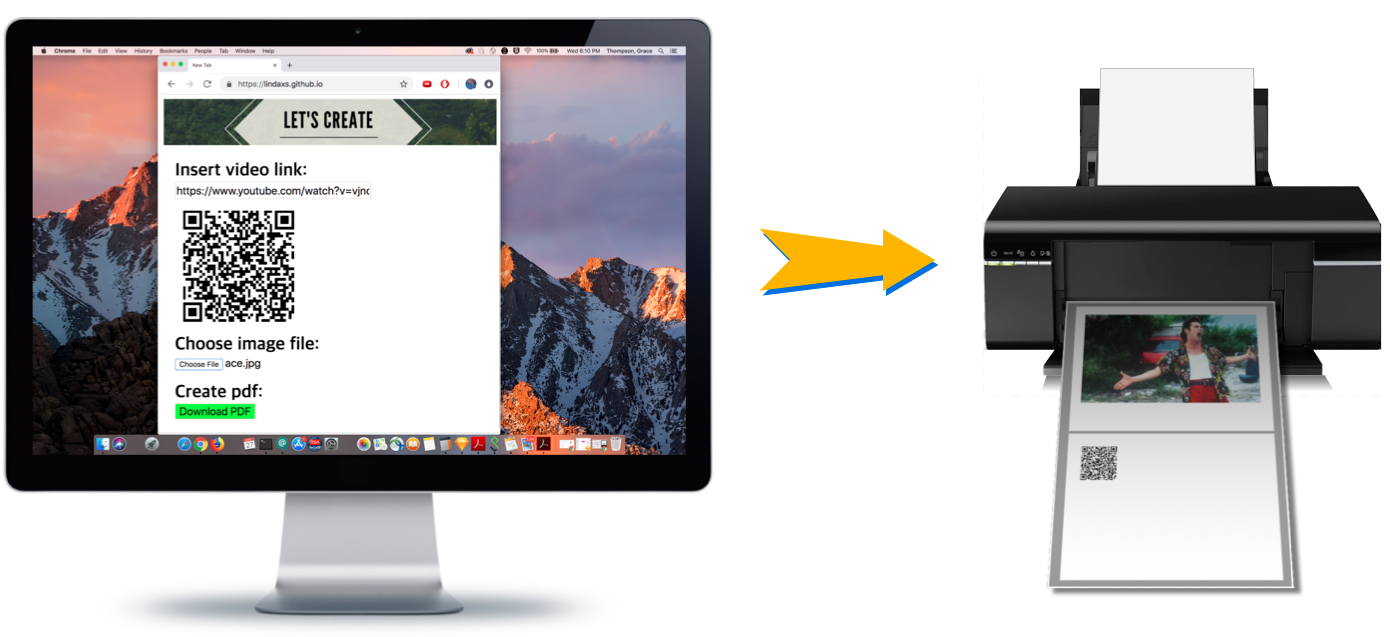
Z.D’s favorite activity was to draw his favorite characters in YouTube videos, but often struggled with that annoying ‘tip of the tongue’ phenomenon we all experience. He would have a video in mind, but couldn’t find the words to look it up. This pain point caused friction in an activity that was supposed to be a relaxing outlet, so my team designed a sketchbook with QR codes that link to Z.D’s favorite YouTube clips to make them more findable.
Our product unexpectedly sparked an idea for another use case: the teachers expressed interest in the QR code technology as a way to help students with poor motor control navigate to websites. With this in mind, we created a website that allows teachers to generate QR codes within 15-seconds.
My contributions in a team of four:
Led research
Contributed to ideation and prototyping
Crafted presentation story
Empathize
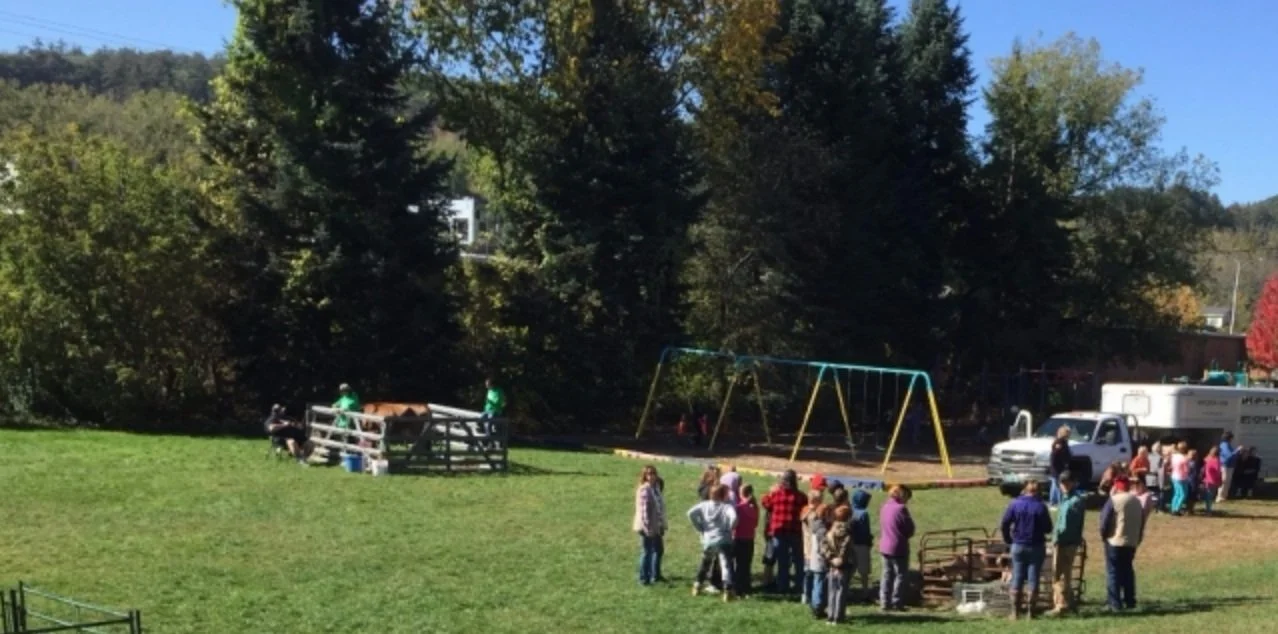
During our first visit to meet Z.D. we made three key observations :
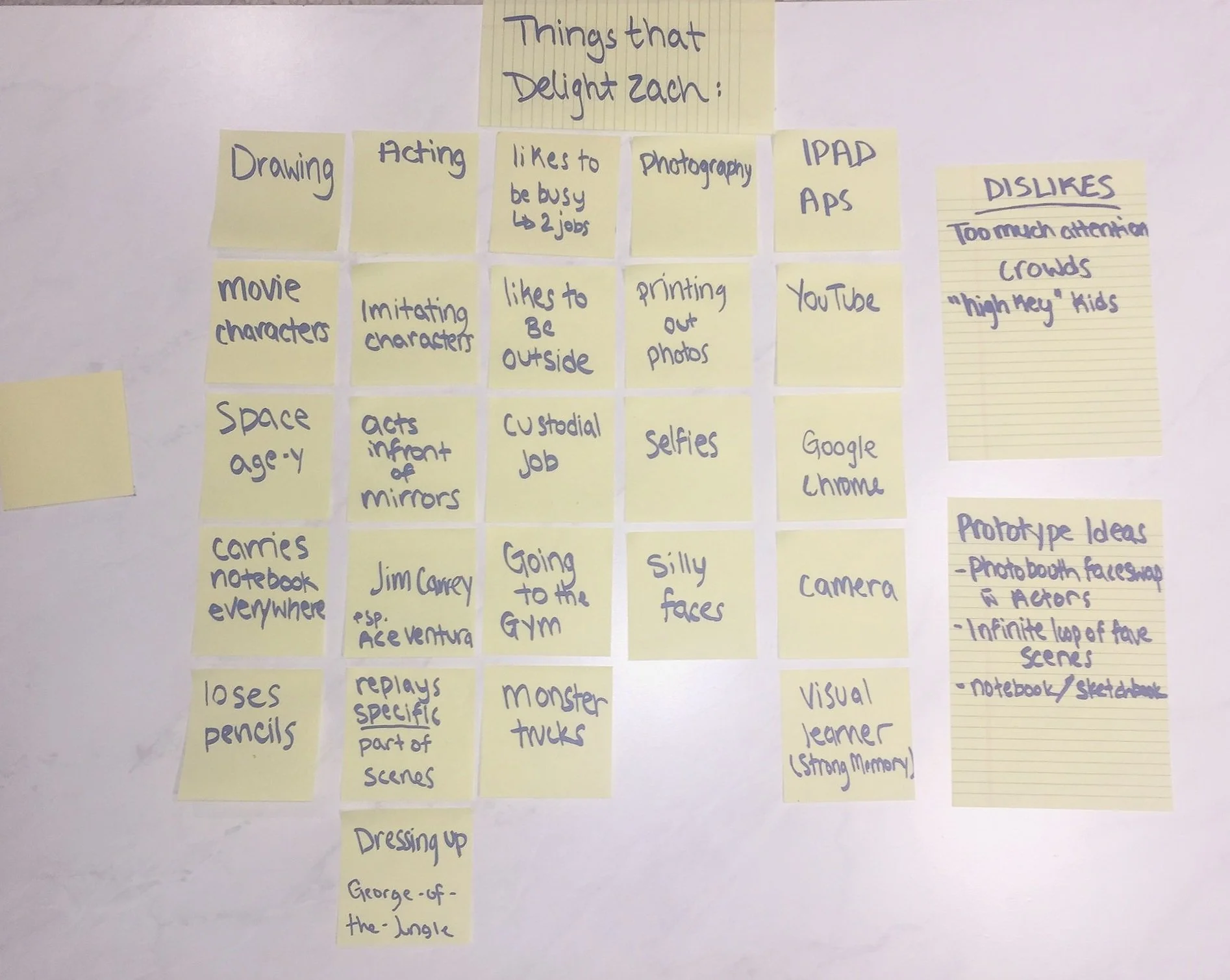
Passionate (art & movies): When handed an iPad and art supplies, Z.D. would enthusiastically re-watch his favorite YouTubes and share his drawings of specific scenes.
Miscommunication: We encountered an instance of struggle amidst drawing: he could not find a specific YouTube video. We tried to help but misunderstood what he was looking for. This miscommunication significantly detracted from the enjoyment of the activity.
Prompt driven: Z.D only engaged with us and used his Talker to communicate when his teacher prompted him to do so.
Define & Ideate
Based on our observations, we came up with three “How Might We” statements to define our goal.
How might we…
Help Z.D pursue his favorite hobbies more independently?
Elevate the delight that Z.D receives from his day-to-day activities at HARP?
Create a product that incites recurring delight in Z.D’s life?
Iterate & Test
We brought the following three prototypes to show Z.D during our second and final visit before the gifting experience
Snapchat Filters
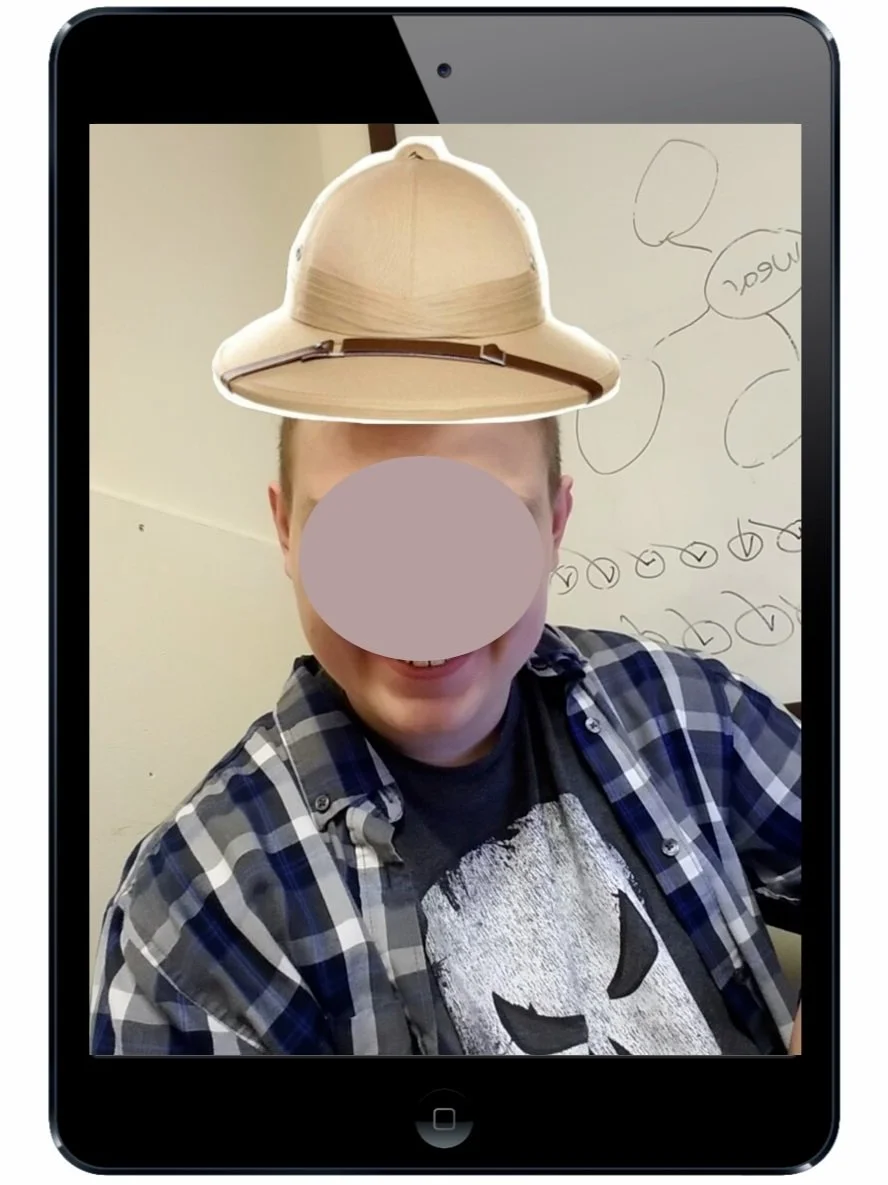
Z.D loves to act and imitates characters in movie scenes. We created Snapchat filters using Snapchat’s open-source tool, from Z.D's favorite scenes which directly places him in the movie.
Observation:
Z.D enjoyed playing with these features for a few minutes, but we concluded that this prototype might not provide entertainment beyond the first few uses.
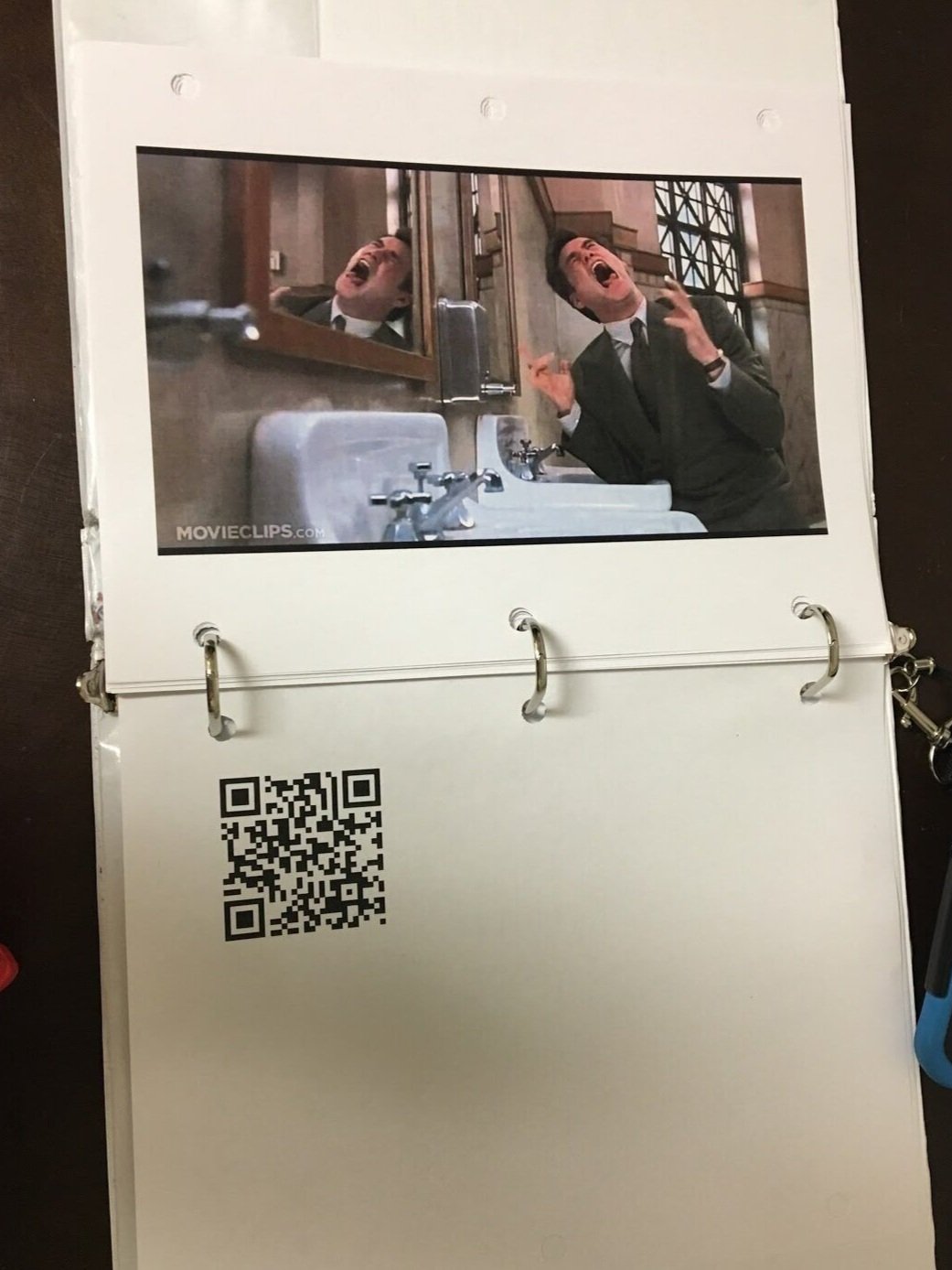
Physical Sketchbook
A binder with images of YouTube scenes, and a corresponding QR code that directs him to the specific scene. We provided space for drawing while watching the video. The QR code allows him to access videos without having to remember the name.
Observation:
We filled the sketchbook with Z.D’s favorite YouTube videos and included videos from similar movies he hadn’t seen before. He ignored the images from movies he had not seen.
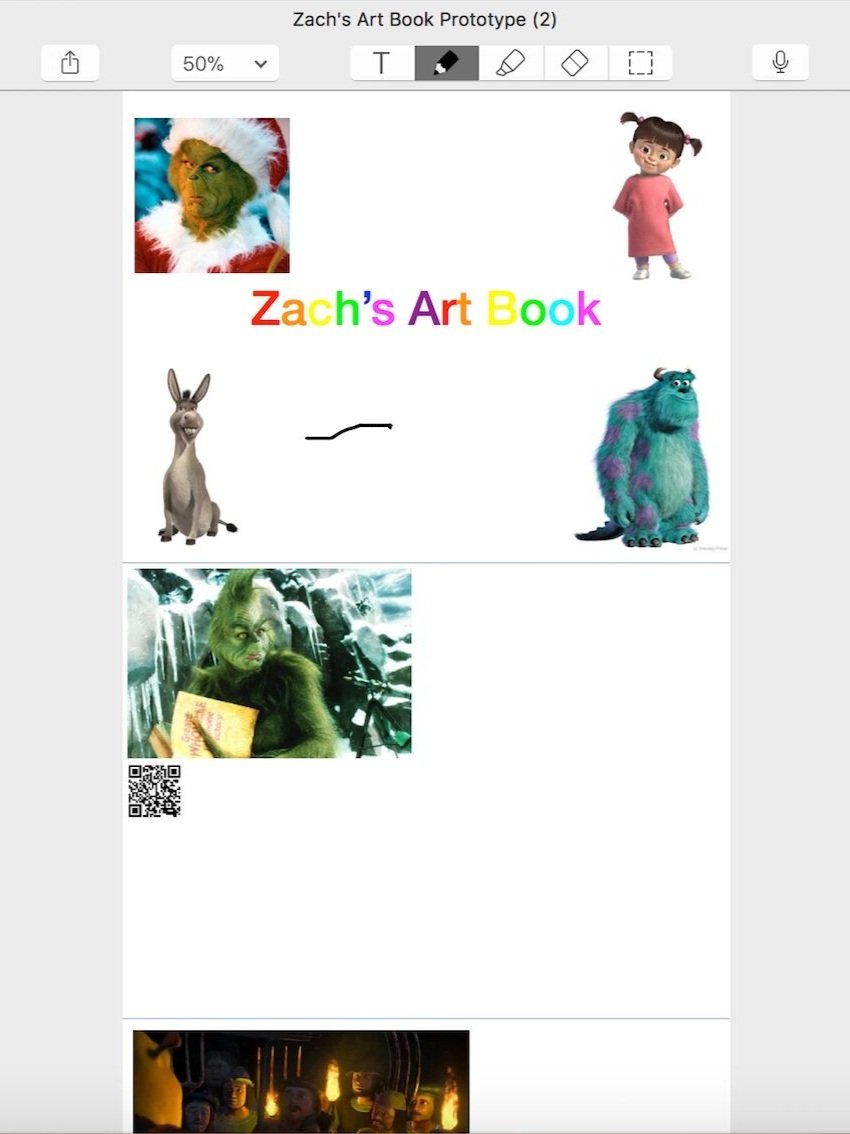
Digital Sketchbook
The physical sketchbook in PDF format allows him to scan and draw directly on his iPad through an app he already used, Notability.
Observation:
Despite having the iPad in hand, Z.D opted to pull out paper for drawing.
Refinement
For the final version of the interactive sketchbook, we made the following adjustments based on the shortcomings of previous prototypes:
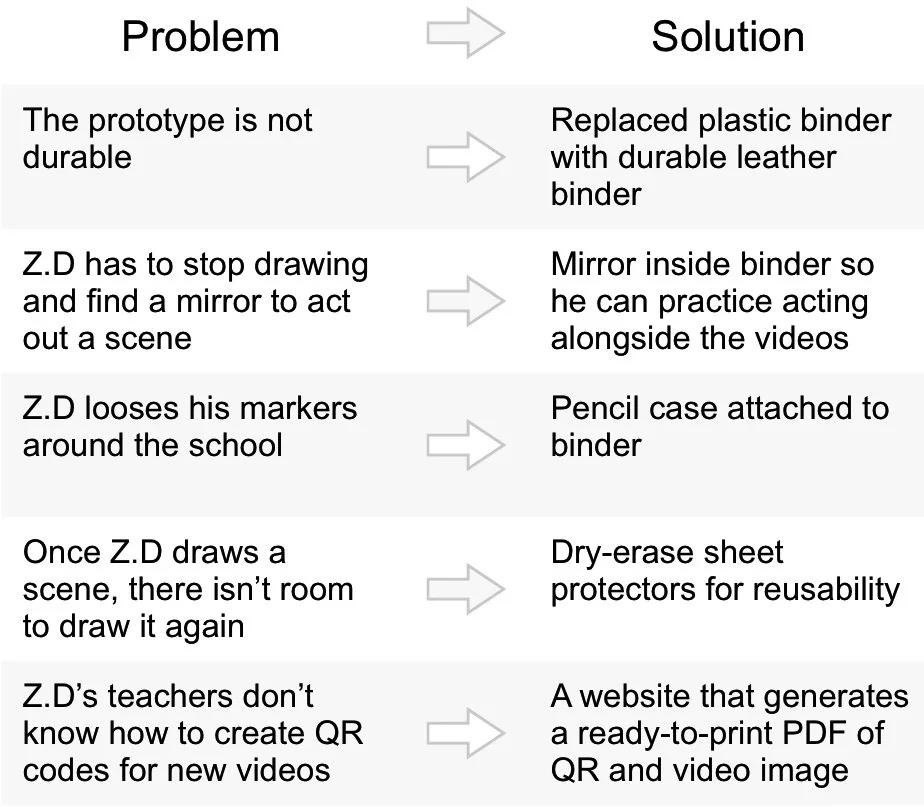
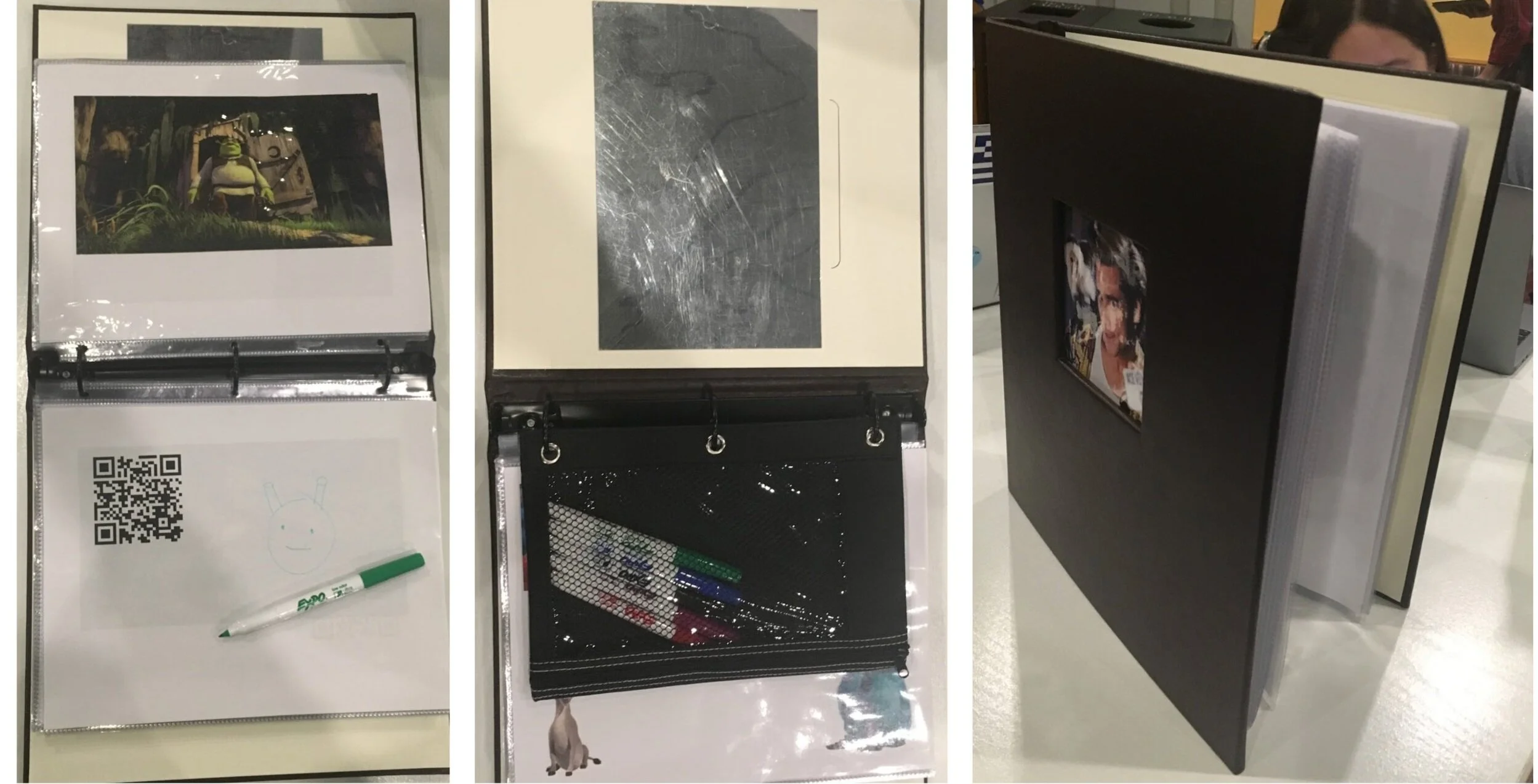
Gift giving
After getting to know Z.D, we brainstormed how to create a ‘delightful’ gift-opening experience.
Scattered QR codes linked to his favorite YouTube scenes on a table for a scavenger hunt experience
Bought Ace Ventura hats for dressing up as his favorite character
Brought a floor-length mirror for acting in front of
Taped large sheets of paper to the table and wall for drawing freely throughout the room
Invited his three closest friends to share the experience
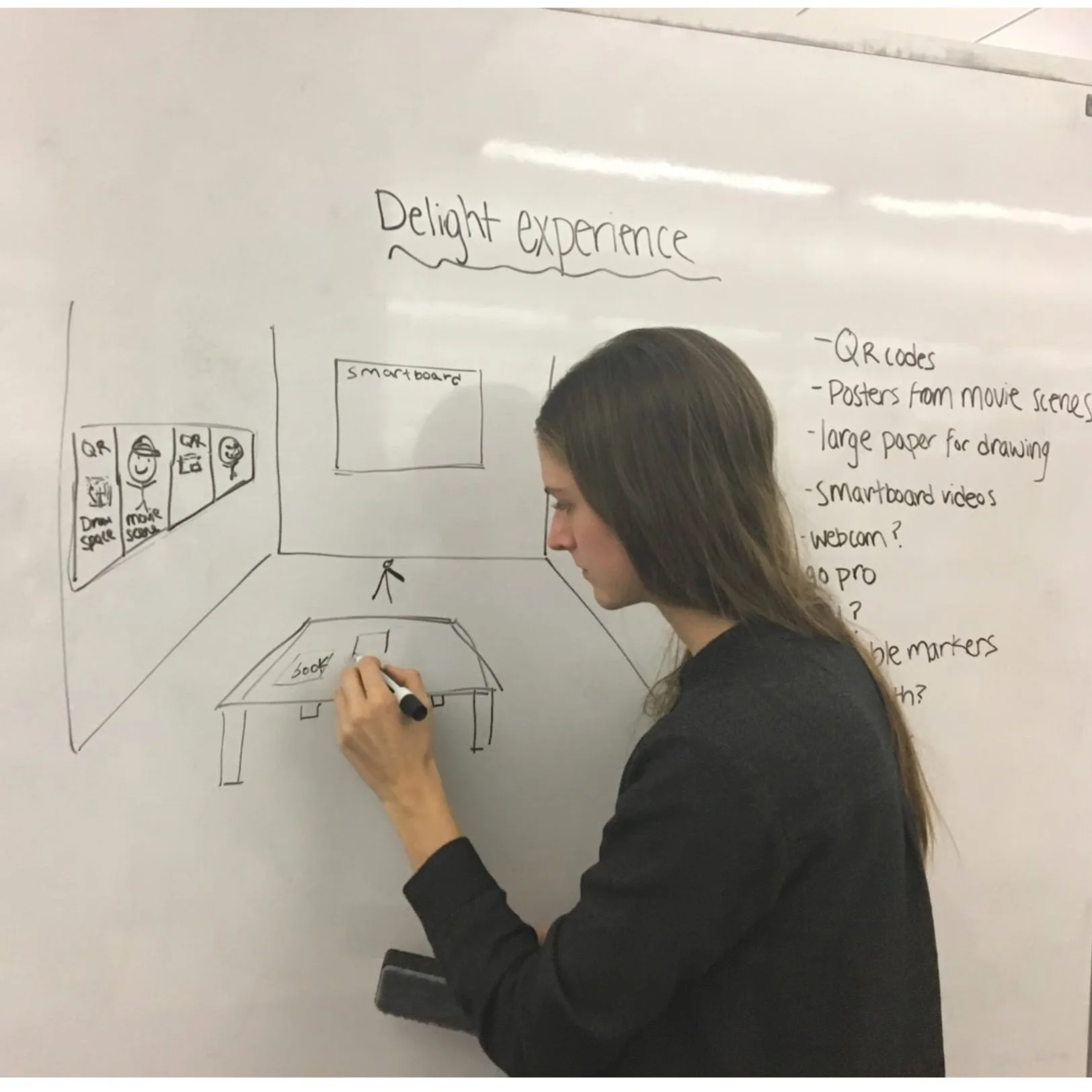
Planning the experience
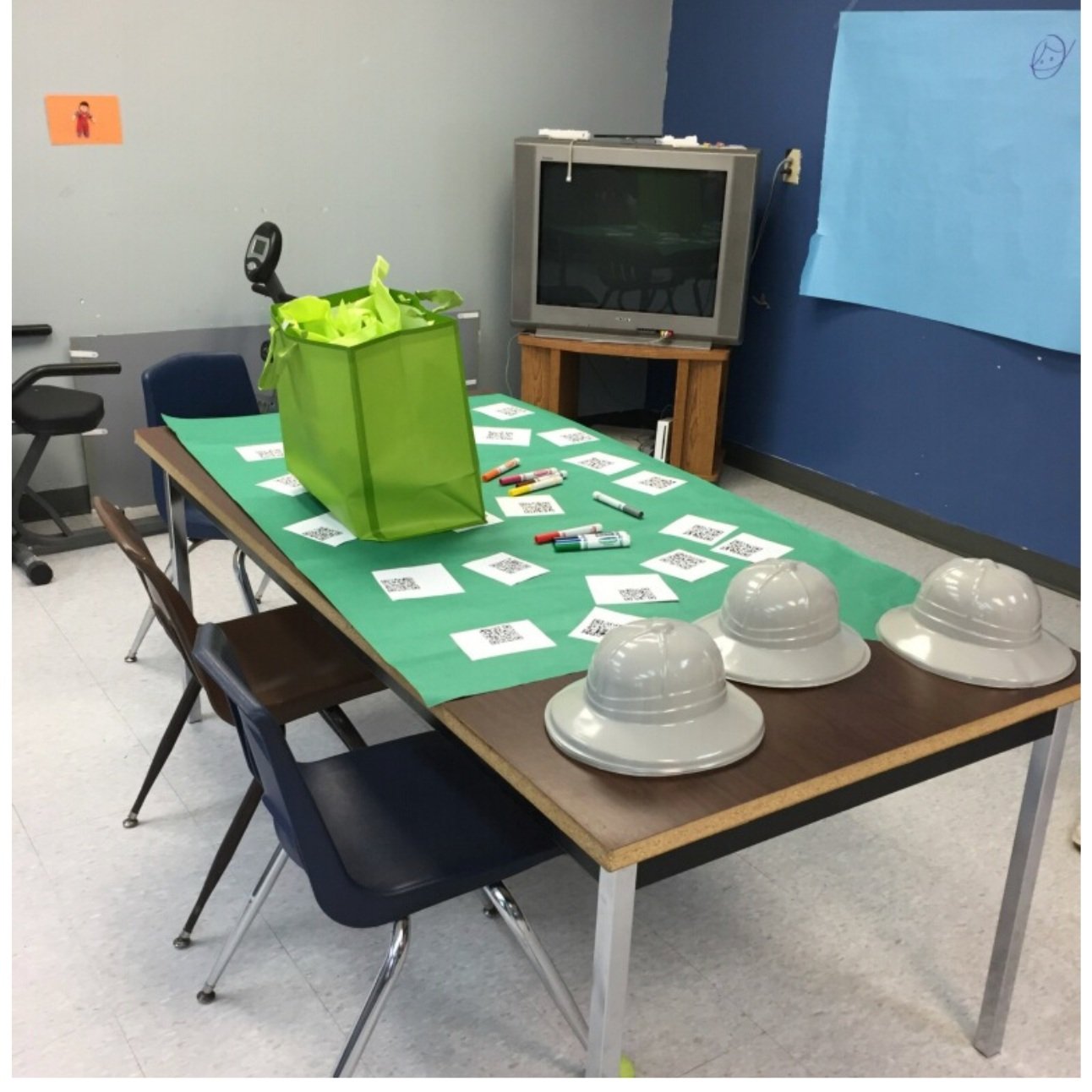
Setting up the experience
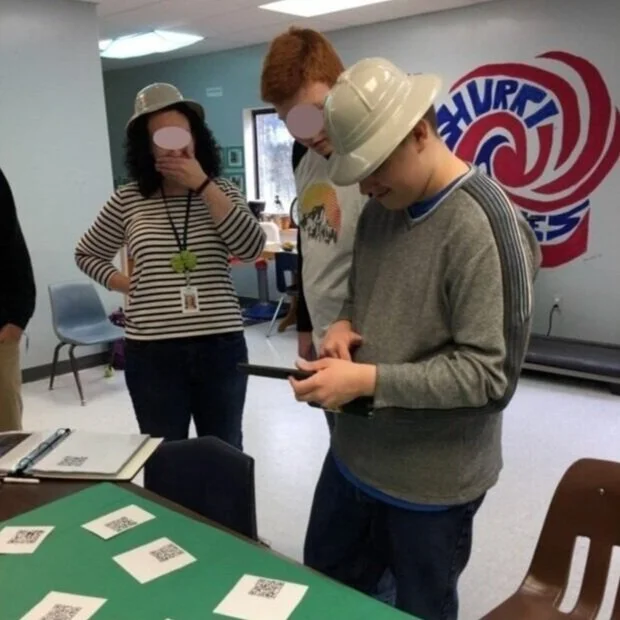
Experiencing the experience
Final outcome
Overall, Z.D appeared to be “delighted” throughout the small party we threw for him. We guided him through the entire experience; prompting him to scan the QR codes on the table and draw on the walls.
In hindsight, we wonder what would have happened if we encouraged him to explore the experience on his own. Would he have enjoyed it more, or less?
After the project, we learned that other teachers at the school adopted our QR-code generating website to help other neurodiverse students access specific websites.
Reflection
The most revolutionary future innovations will be rooted in today’s problems; recognizing one’s own biases is therefore the first step towards designing a more inclusive future. This project allowed me to experience the unbiasing power of interdisciplinary design.
As the research lead, I was challenged to rely on observation alone rather than interactive research approaches learned in psychology classes. My partner, a computer science major, also opened my mind to a wider range of possibilities. She had the idea of programming the QR code website that made the sketchbook more likely to serve as a long-term source of entertainment.