
Hosting the Olympics: Opportunity or Catastrophe?
A systems dynamics model created for an undergraduate class
Tools: Stella (systems dynamics software)
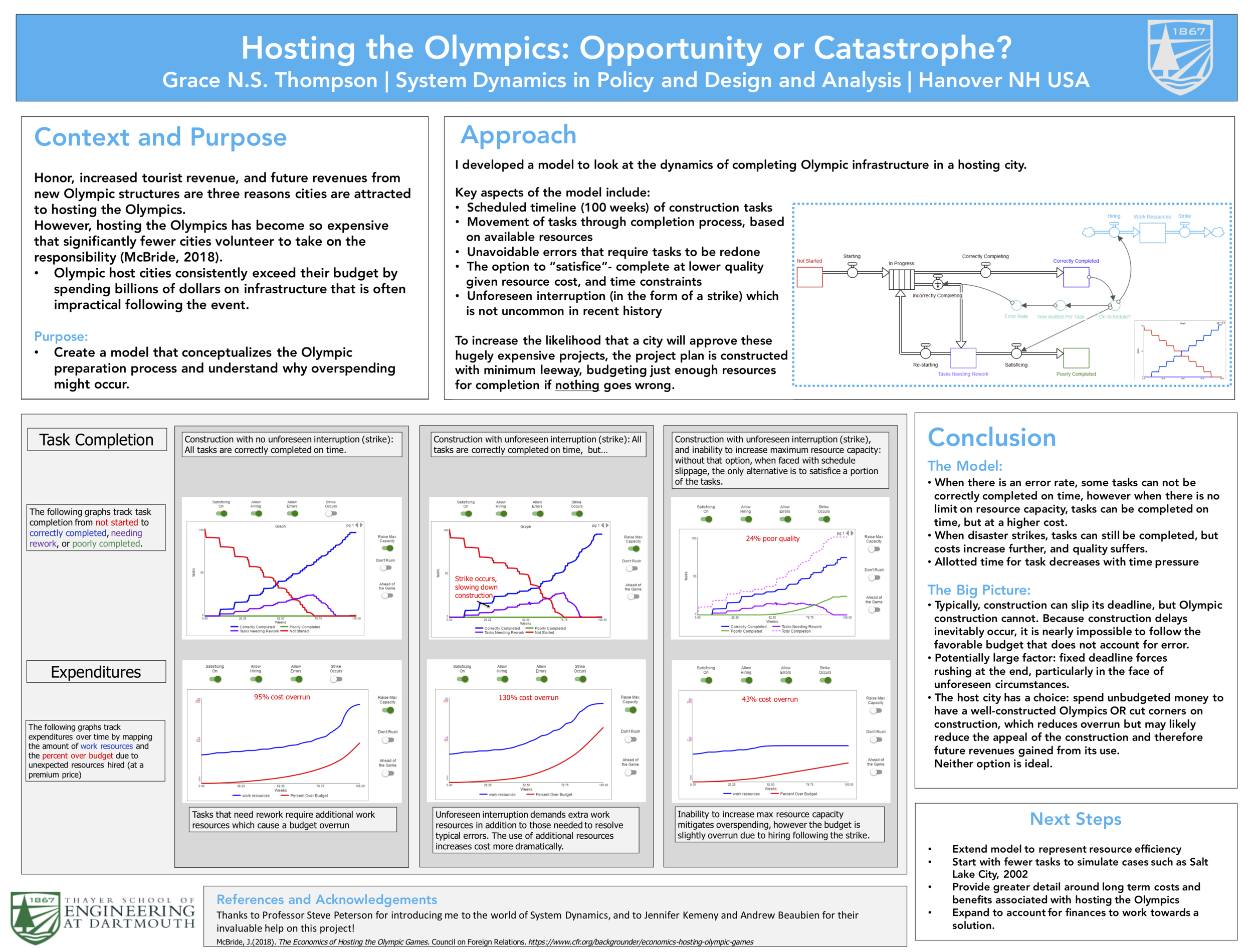
In a nutshell
System Dynamics is a problem-solving method that uses causal-loop diagrams to illustrate the inner workings of systems and uncover potential solutions to problems.
After reading about how hosting the Olympics can be a costly gamble, I chose to create a systems dynamics model that demonstrates how the games consistently run over budget as a result of construction inefficiencies and underestimated costs.
This project was accepted for presentation at the 2018 International System Dynamics Conference.

The Model
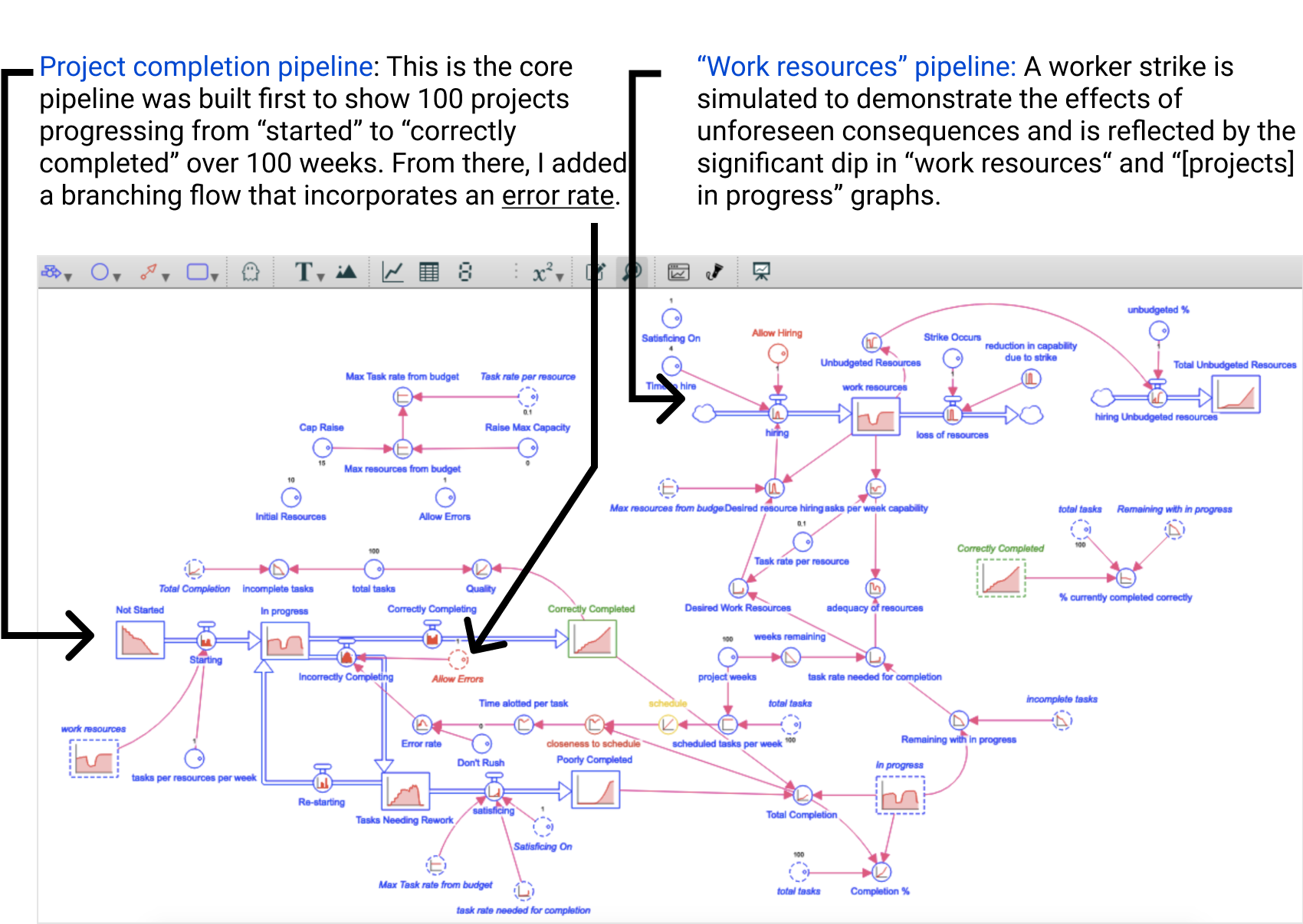
Running the model
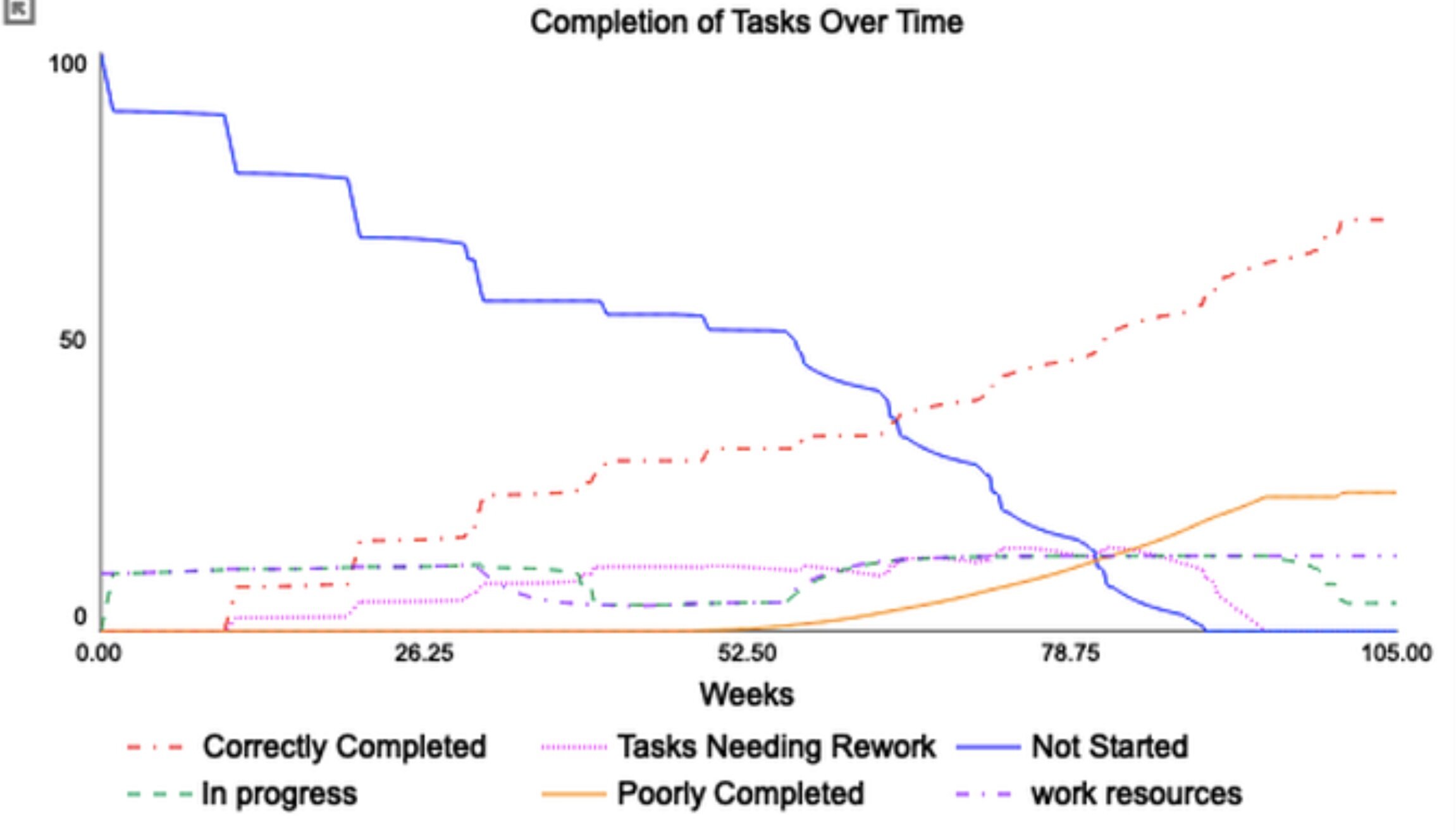
The chart shows the completion of 100 tasks (Y) over time (X) given a 100-week deadline.
As shown, the inevitable error rate (pink line) leads to a significant amount of tasks being completed at a poor standard (yellow line).
Model data table
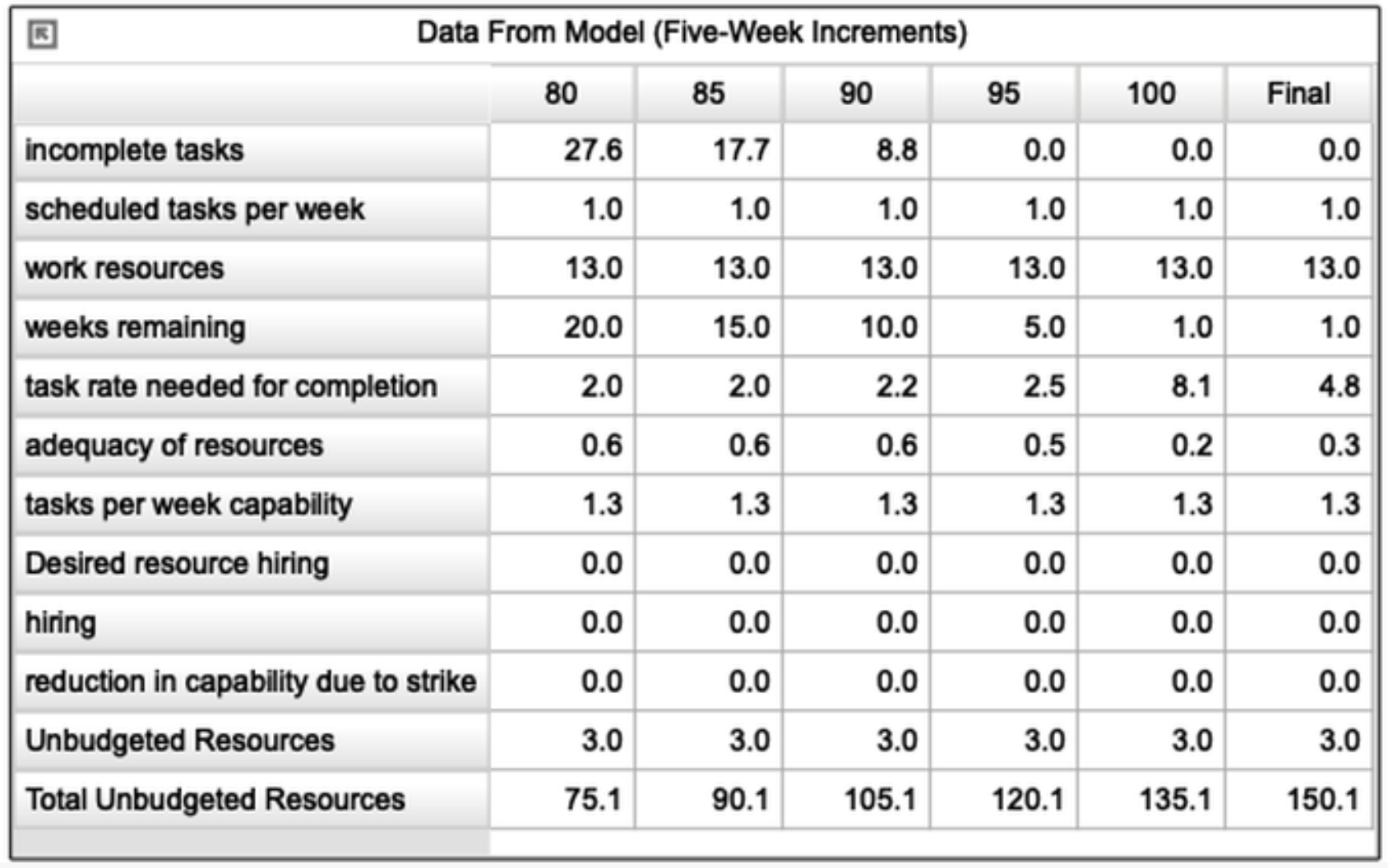
This is the table generated by the model. It shows progress in five-week increments.
In the final weeks leading up to the deadline (week 100) the rate of task completion required to finish on time increases alongside the total amount of unbudgeted resources. Meanwhile, the adequacy of resources decreases.
After falling behind the tight schedule, the only choice is to rush the remaining tasks (resulting in decreased quality) and pay for additional unbudgeted resources to finish on time.
Conclusion
Typically, construction projects can slip the proposed deadline, but Olympic construction cannot. Advocates for hosting the Olympics propose favorable budgets to gain support from stakeholders. Because construction delays are inevitable, it is impossible to follow a proposed budget that does not account for error.
The fixed deadline forces rushing at the end, particularly in the face of unforeseen circumstances (a strike or weather events). This forces the host city to make a difficult choice:
Spend unbudgeted money to have a well-constructed Olympics,
Or,Cut corners on construction, which reduces overrun but reduces the appeal of the construction and therefore future revenues from its use.
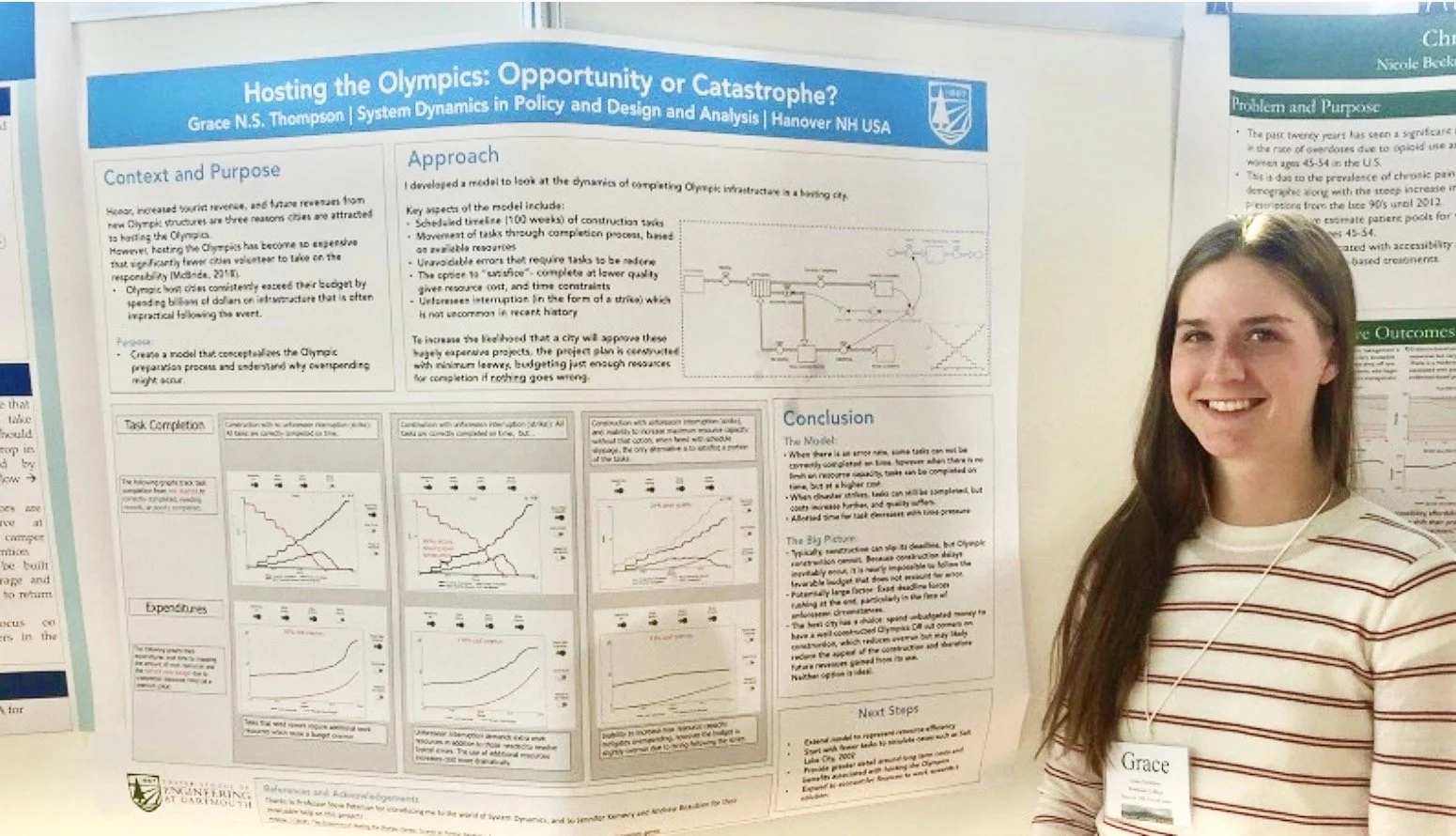
Me in Iceland at the International Systems Dynamics Conference!
What I learned
There can be an incredible amount of interdependent variables that contribute to an outcome. Our brains tend to be incapable of holding more than five pieces of information in our working memory; far fewer than the 50+ variables in this model. When we simplify a problem through conversation, we underestimate the amount of work it will take to fix it. For this reason, creating a visual model is essential for understanding and communicating the extent of a problem.