
Google Equitable Design Fellowship
How can we leverage design as a force for good, ensuring products cater to all users?
We designed two meditation apps. During the creation of one app, we incorporated equitable design methods. We then comparison tested the apps to evaluate the effect of equitable design.
My Role: Product Design Lead (Team: Nadia, Bri & Isa)
Mentors: Zena (IDEO), Google’s PI&E Team, Vince (Berkeley)
Timeline: 4 months
Methods: A/B testing, co-creation workshop, design thinking, UI/UX design
Tools: Figma, Qualtrics, Google Forms
Summary
The fellowship was structured as two 6-week sprints:
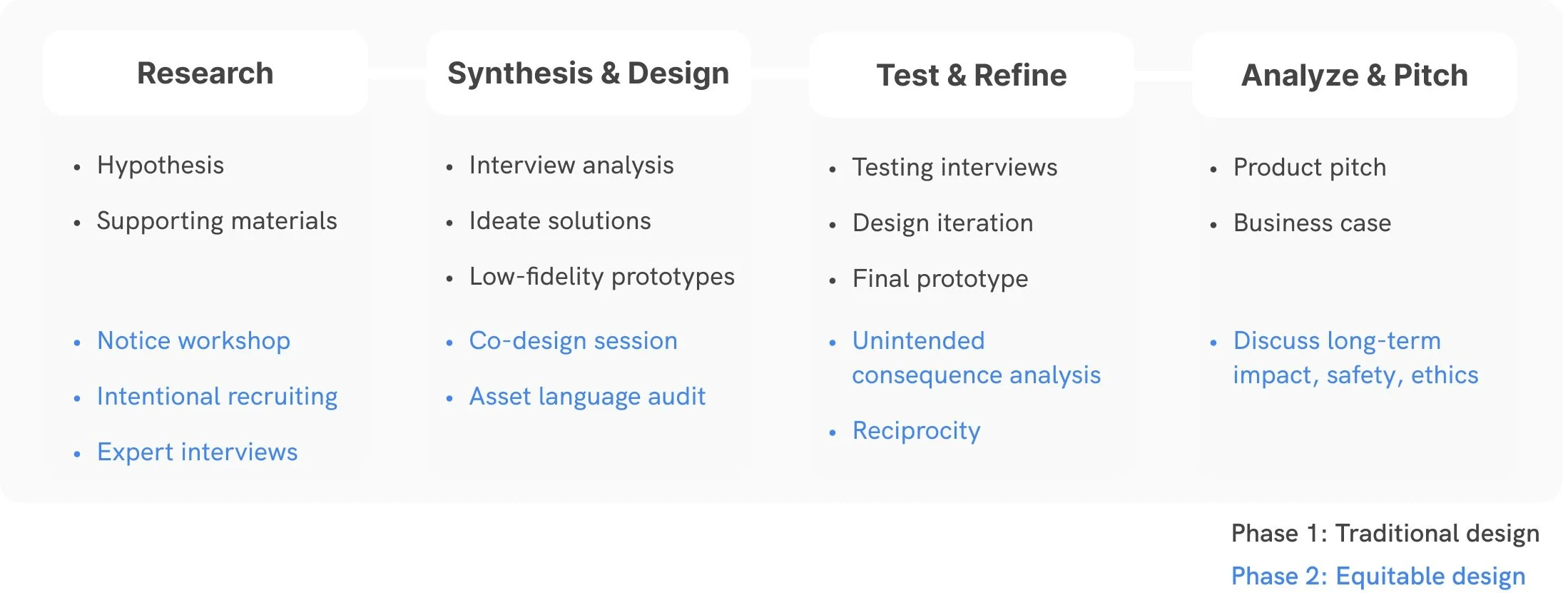
Sprint 1 Traditional Design: App #1
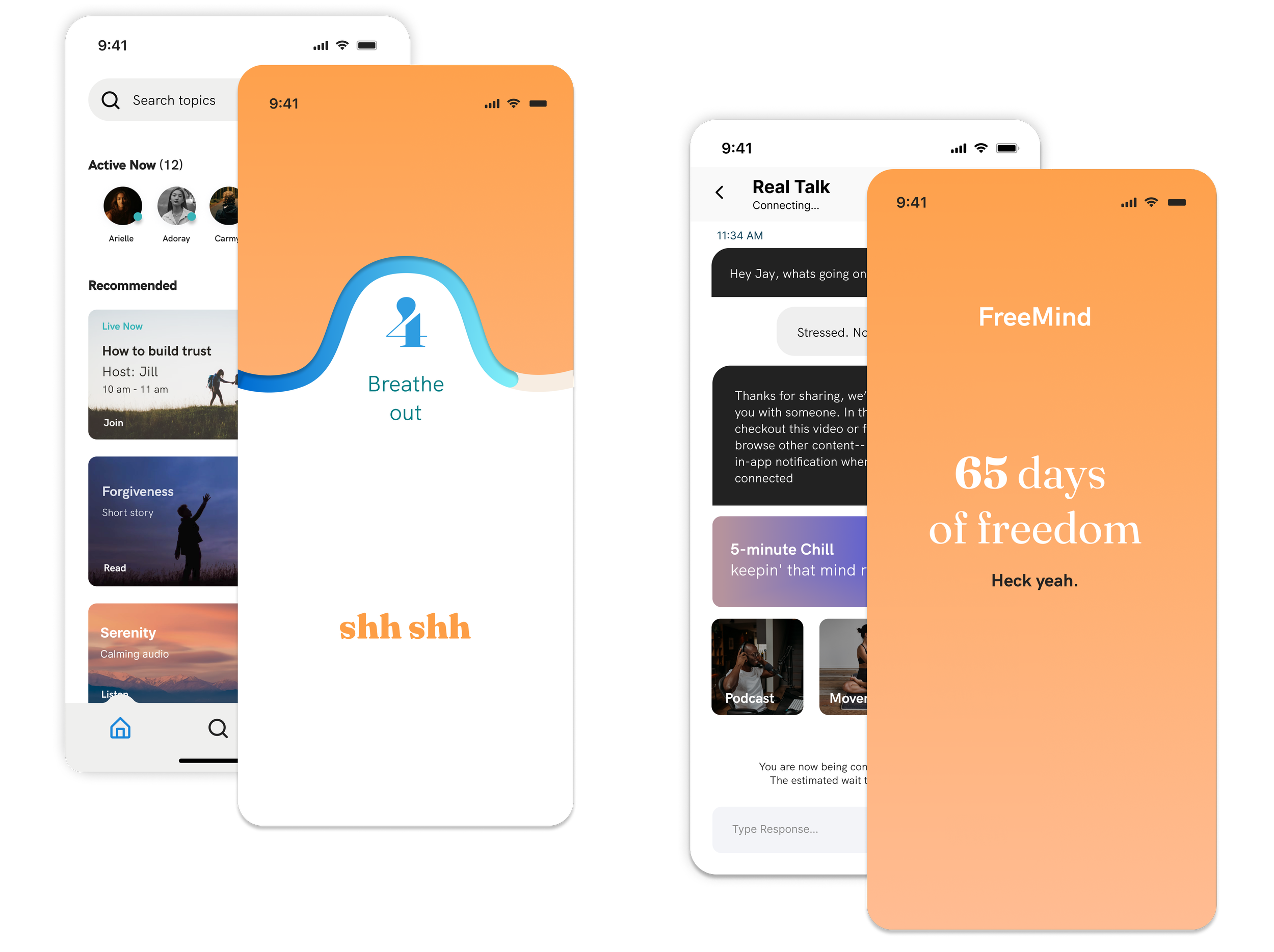
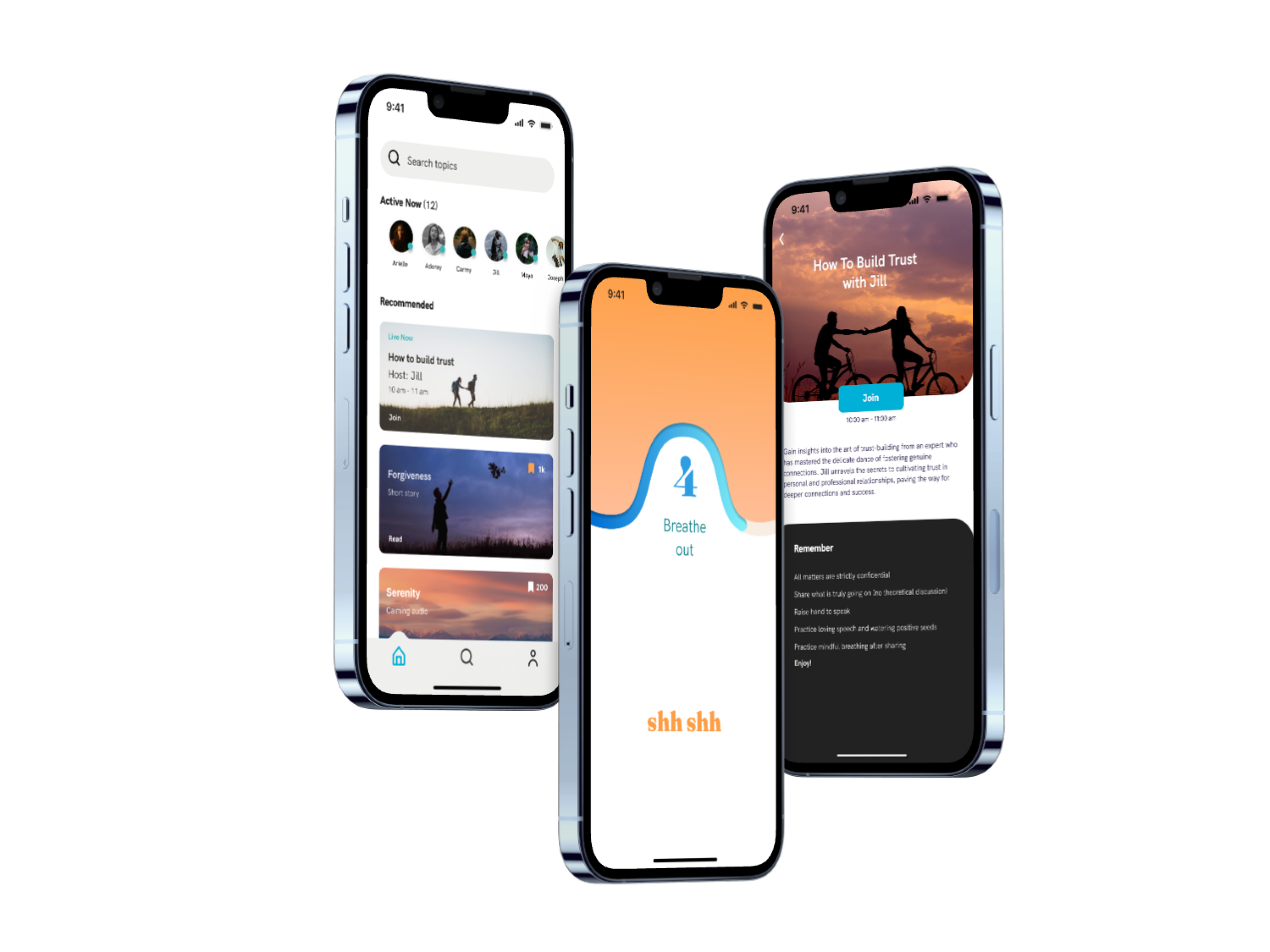
We created ShhShh… a meditation app for all.
Sprint 2 Equitable Design: App #2
We created FreeMind: a meditation app for formerly incarcerated individuals. This phase added co-design workshops and risk analysis.
Analysis Survey: App #1 versus App #2
We concluded that equitable design, though more complex and time-intensive, resulted in a product that was more responsive to specific user needs.
Traditional Design Process vs. Equitable Design Process
Why a meditation app?
Although meditation apps are proven to alleviate mental health challenges, they are used by a narrow demographic of users.
The meditation market is projected to expand 2.5x by 2027— it is essential that we understand how to create equitable platforms to welcome more diverse audiences to access the health benefits.
Hypothesis 1 - Inclusivity
Users will prefer the equitably-designed app regarding inclusivity and representation (e.g., "this app feels like it was designed for me") compared to the non-equitable app, regardless of the participant's demographic background.
Hypothesis 2 — Trust and engagement
Participants will report higher trust in the content and greater intent to continue using the equitably-designed app than the non-equitable app, driven by feeling more accurately represented and accommodated.
Phase 1: Traditionally Designed App
Design Research | Discovery interviews
Question: How do people perceive ‘Mindfulness’? Do they practice it?
Participants: Recruitment survey distributed to Berkeley community
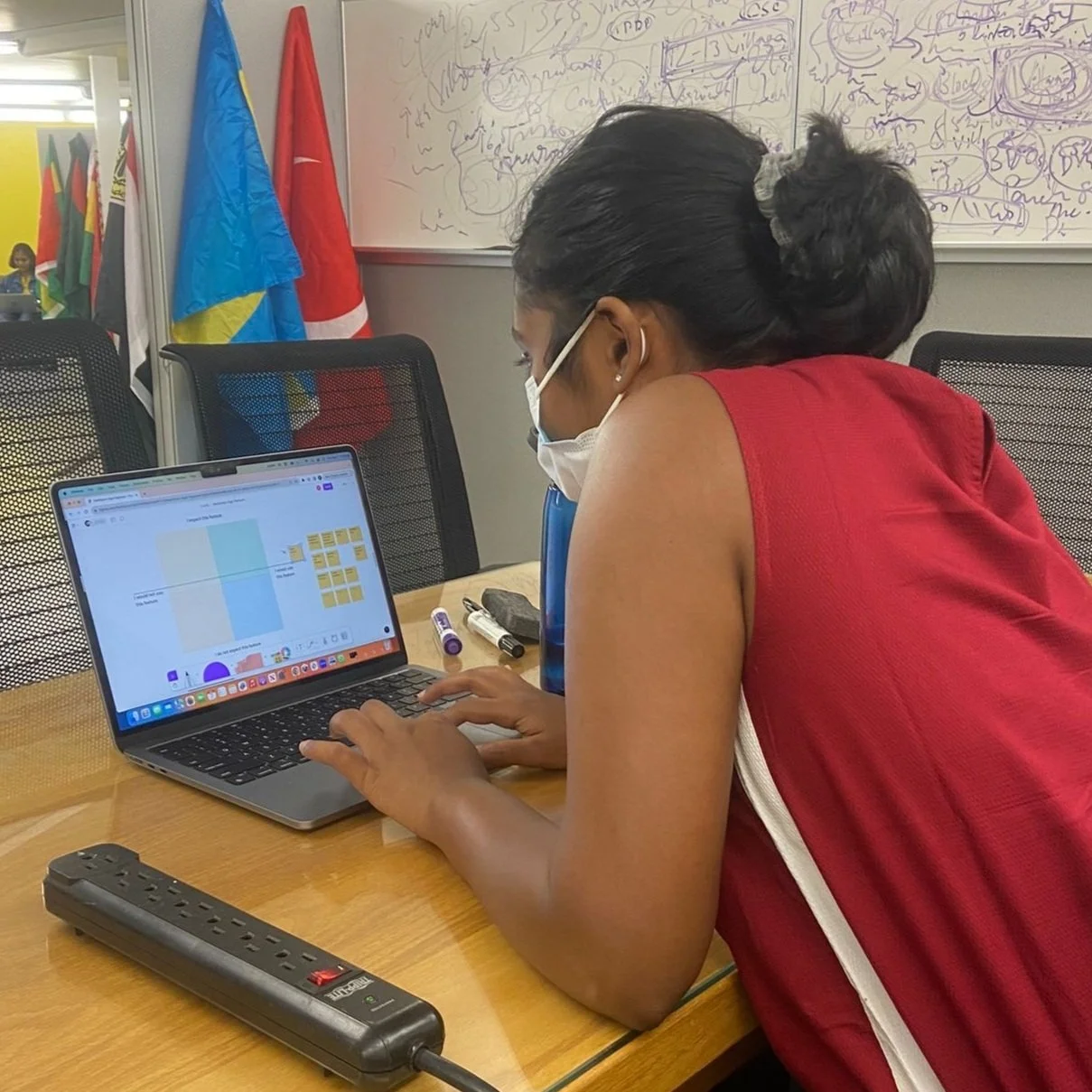
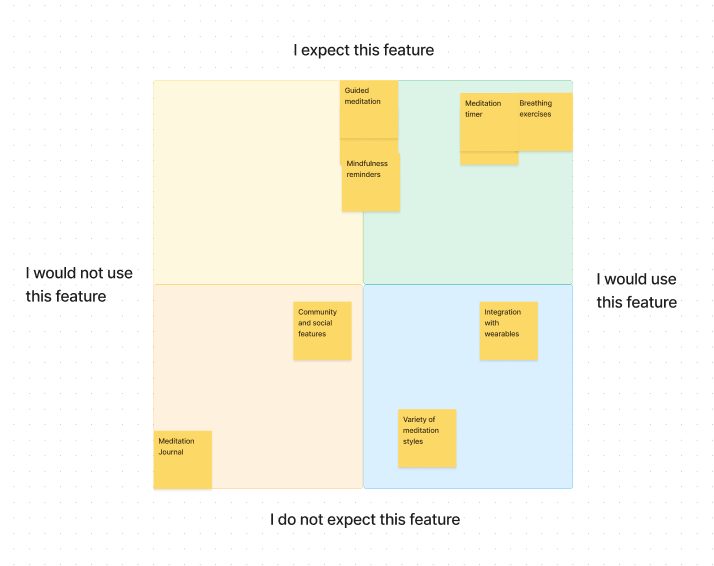
Method: Five 1-hour interviews with participants representing each level of meditation experience (Never meditated before —> I meditate daily)
Insights
Traditional meditation is commonly perceived to be difficult
Routine activities can feel meditative/mindful (walk, shower)
Social media is a popular source of Meditation inspiration and guidance
Synthesis & Design | Mid-fidelity Prototype
We developed two prototypes addressing the insights:
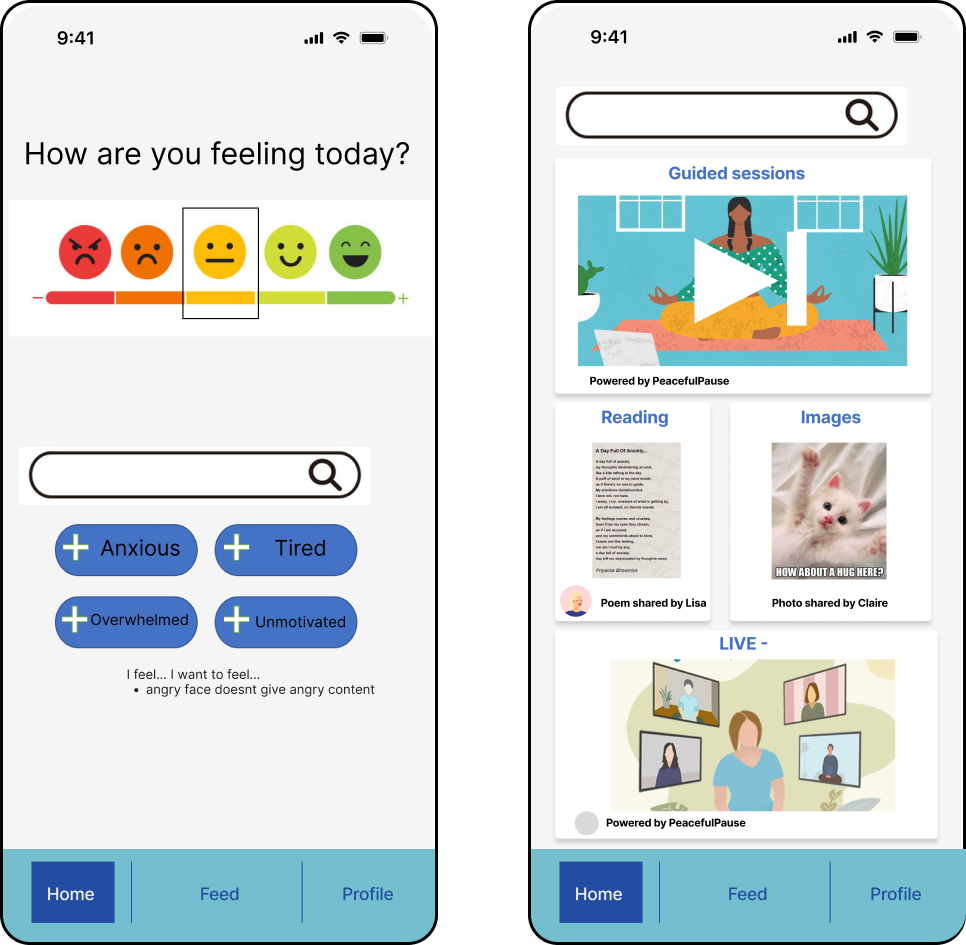
Problem 1: Mindful social media content is mixed with anxiety-inducing content (doom scroll)
Solution 1: Social media with only mindful content
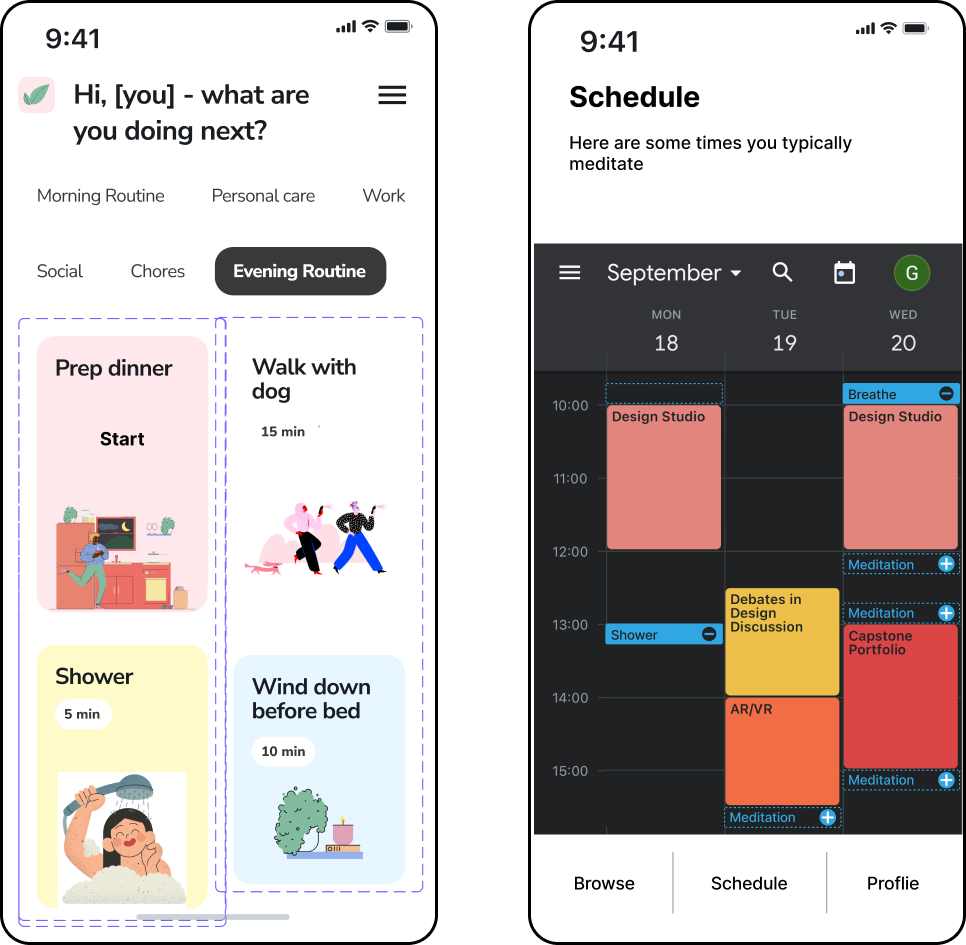
Problem 2: Its difficult to remember find time to meditate
Solution 2: App assists you to find time for meditation on-the-go
Test | A/B test
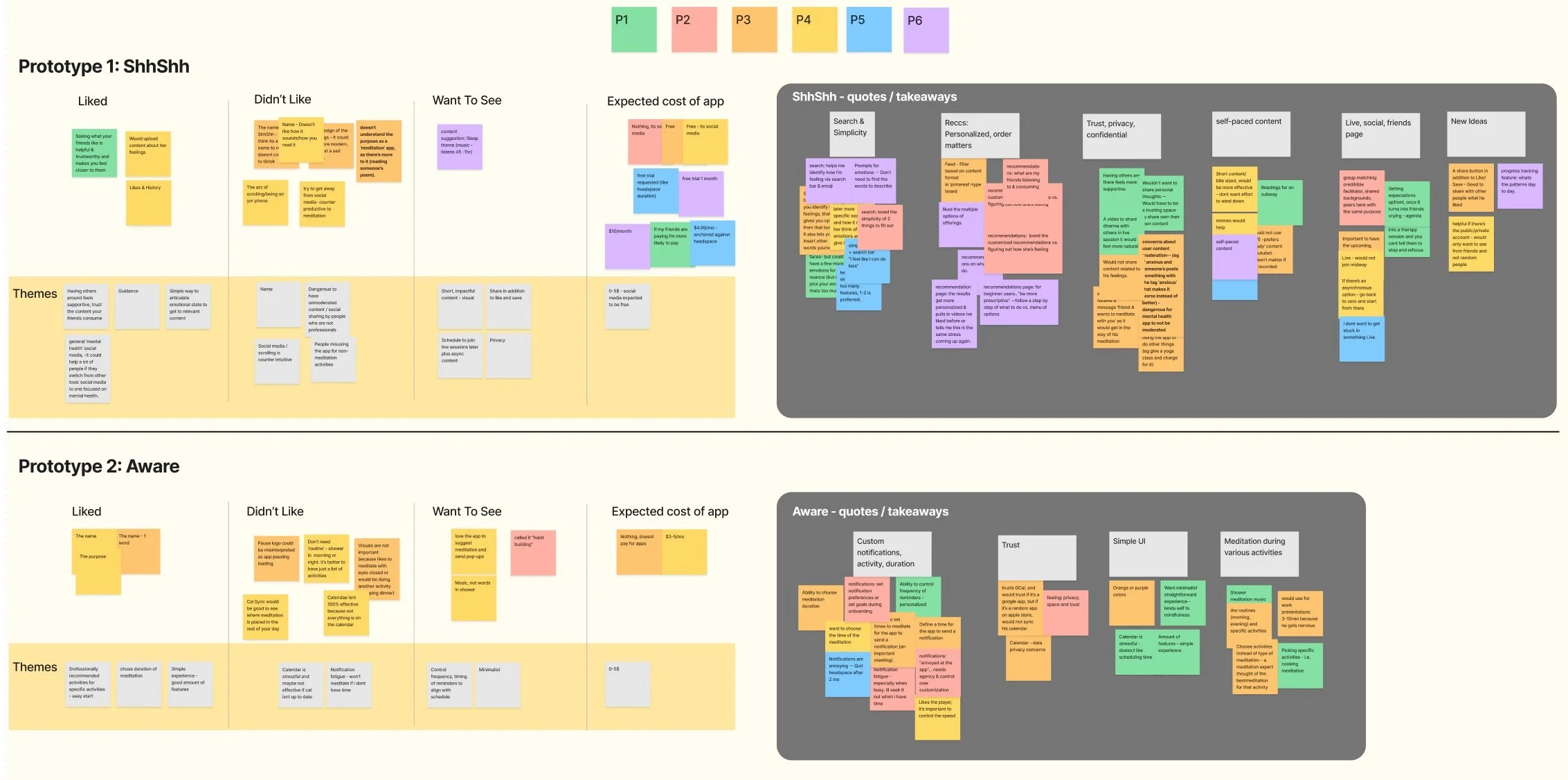
To test the two prototypes, we stationed in a high-traffic area and invited participants to provide feedback.
We recorded notes (key quotes, behavioral observations, and suggestions) and compiled them in a FigJam board. We then synthesized insights into categories with guidance from Zena, our IDEO mentor.
Refine | High-Fidelity Prototype
Overall, most preferred the ‘ShhShh’ concept because it provided a mindful alternative to TikTok.
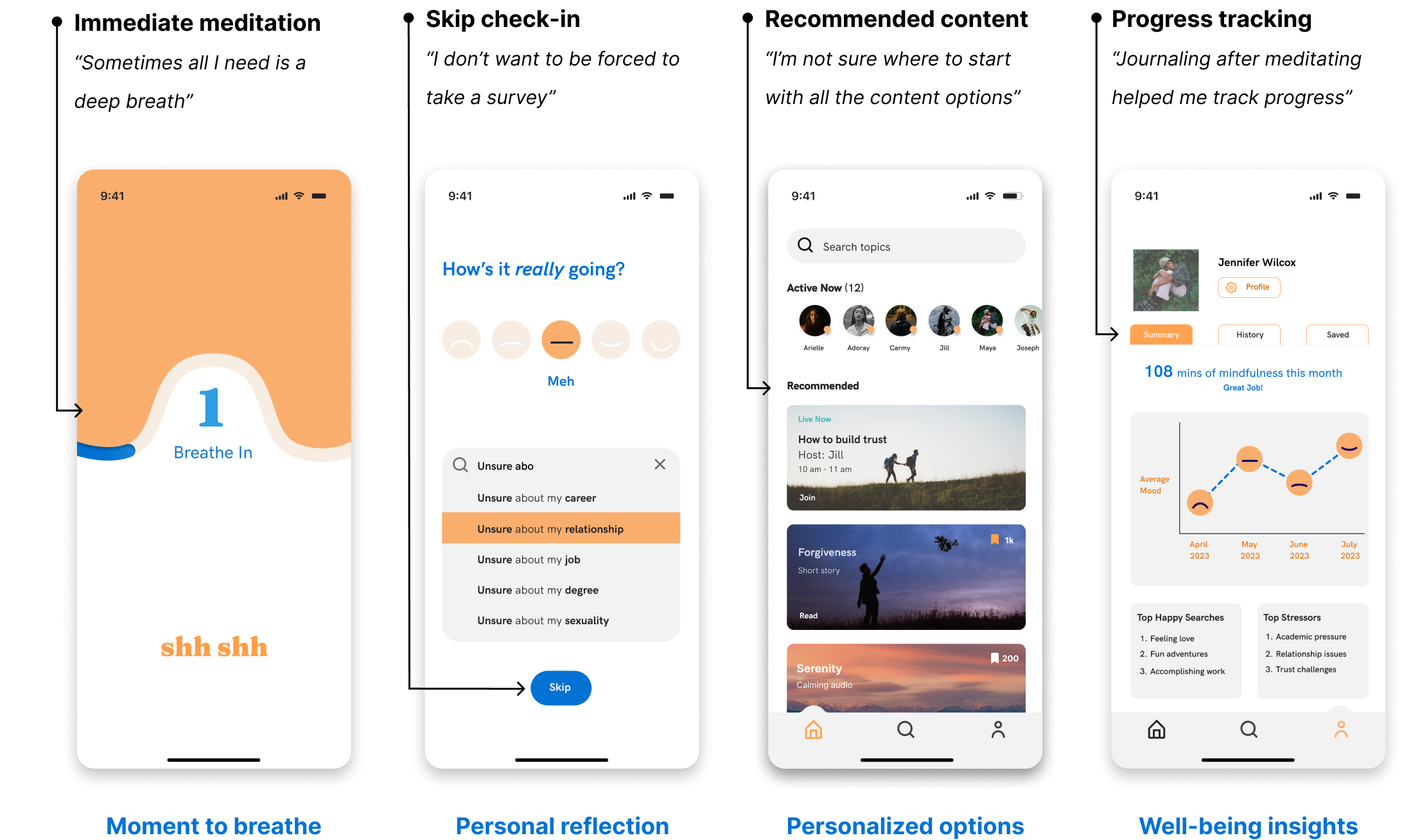
We adjusted the ShhShh app based on user feedback.
Phase 2: Equitable Design App for the formerly incarcerated
Why design for the formerly incarcerated?
This underserved audience could benefit from mental health support
Design Research | Discovery SME interviews
Question: What are formerly incarcerated individuals’ relationship to Mindfulness?
Participants: People in the formerly incarcerated community (former inmates, social workers)
Method: 5 participants, 1-hour semi-structured interviews
Insights
Support groups improve reintegration to society
Meditation is perceived to be a luxury for ‘others’
Religious books are commonly used because they offer “24/7 support”
Synthesis & Design | Co-design prototype
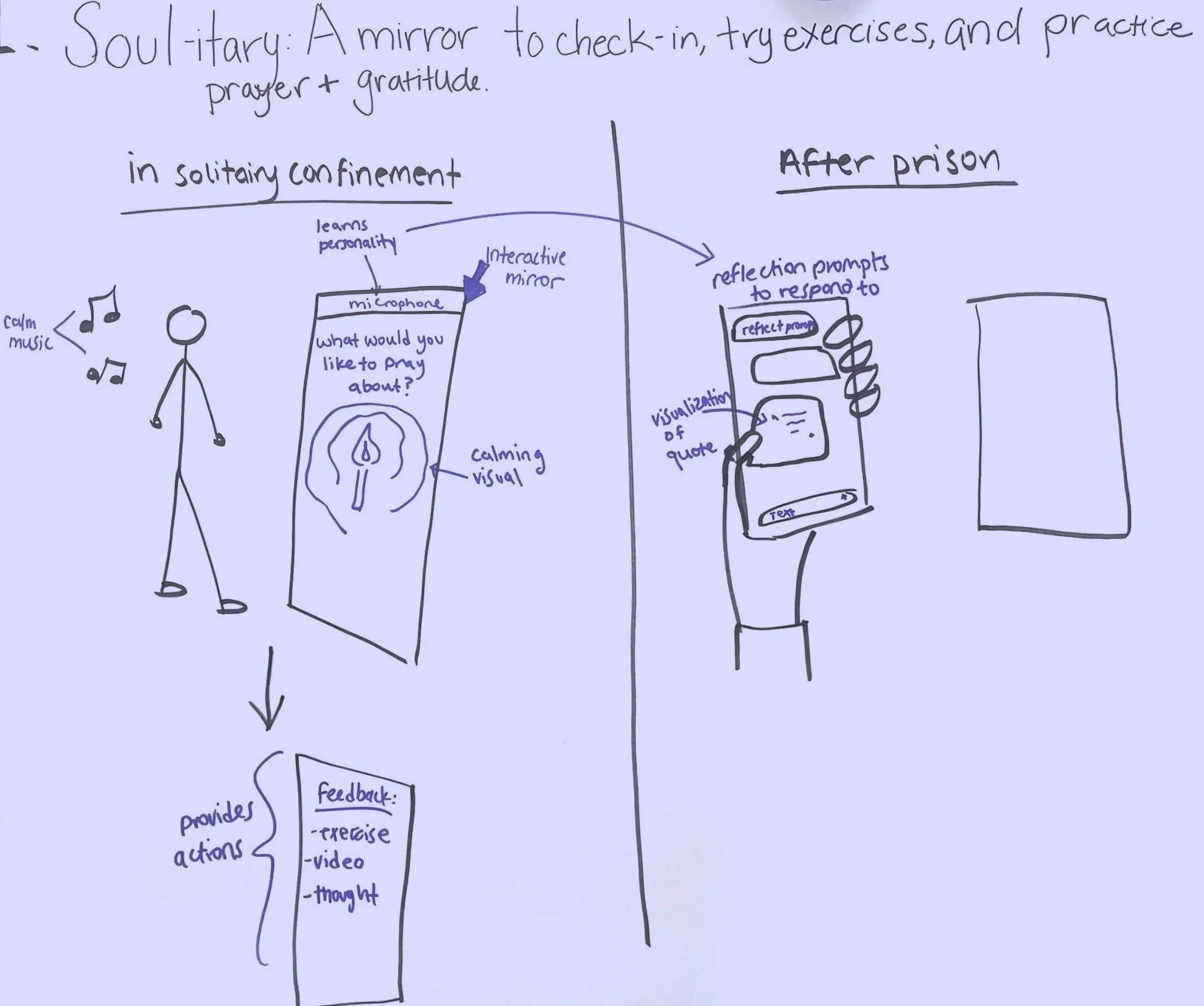
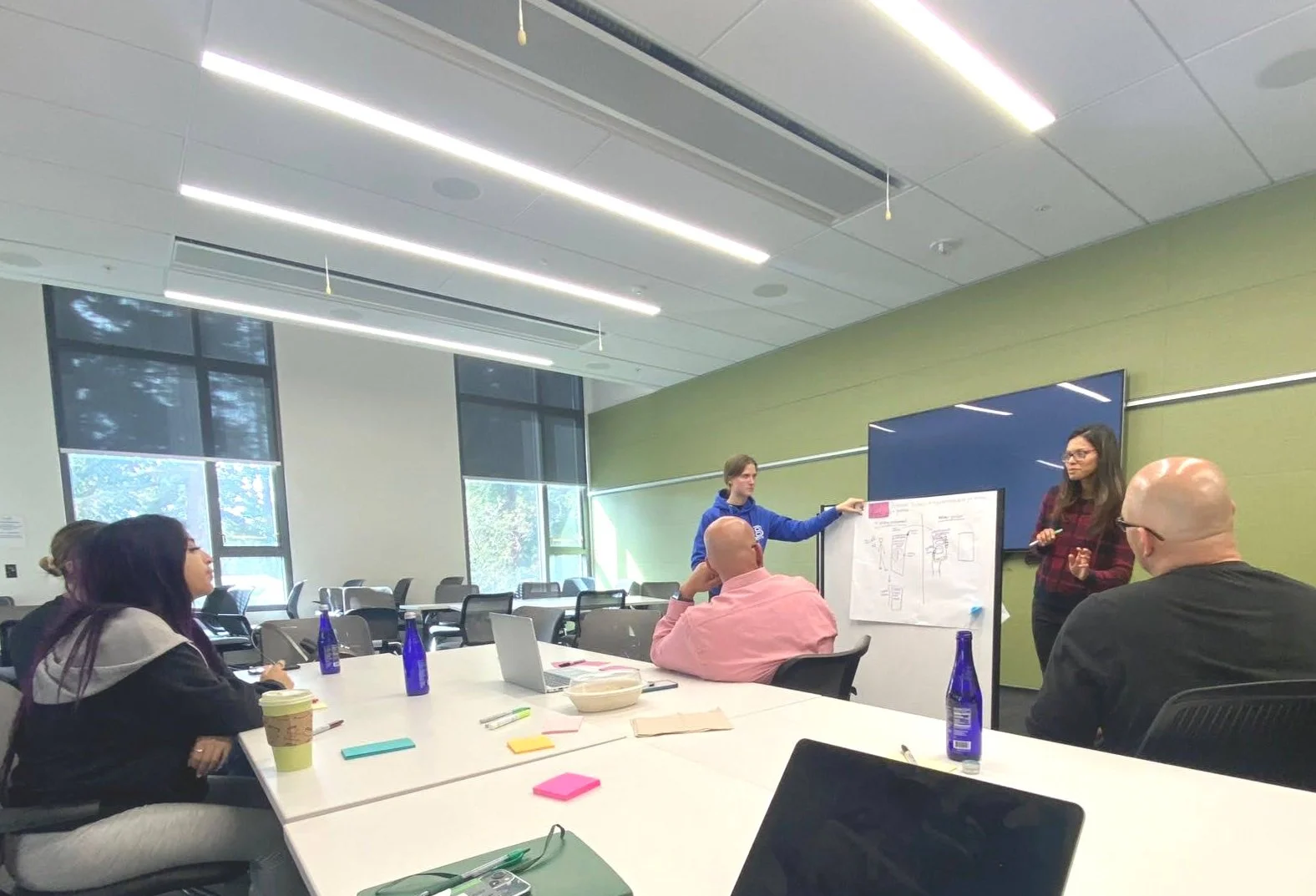
Nadia and I synthesized insights into sketches to spark conversation during a 2-hour co-design
We presented the traditional prototype to get into a feedback mindset & learn about the co-design users’ needs
Paper sketches helped launch into co-designing a new meditation app
Refine | Mid-fidelity prototype
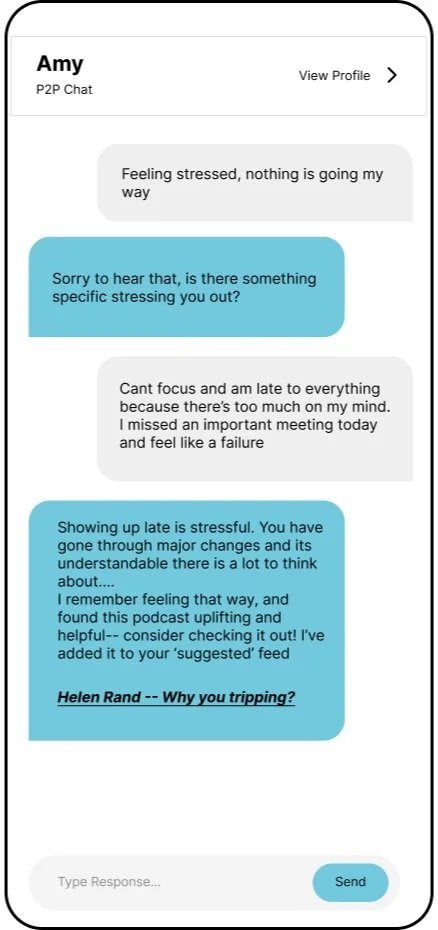
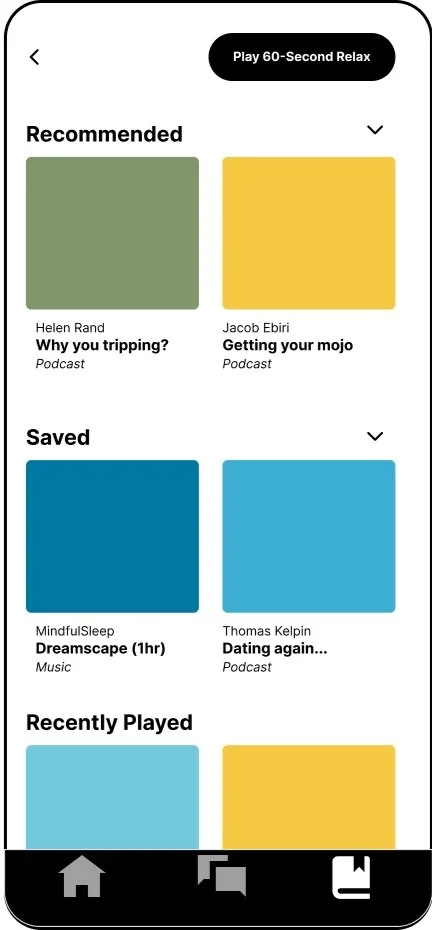
Insight: “You leave prison with nothing”
Feature: Immediate support
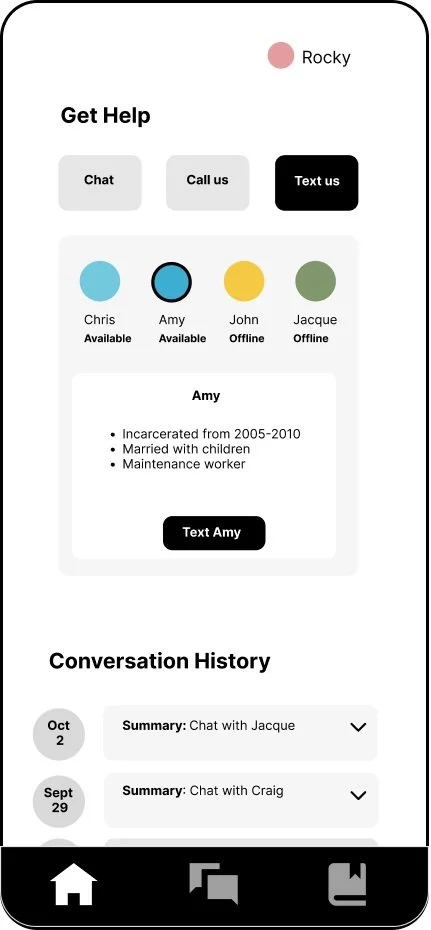
Insight: “Talking to peers was instrumental in my recovery”
Feature: Peer support network
Insight: “My motivation came from podcasts”
Feature: Success stories from likeminded people
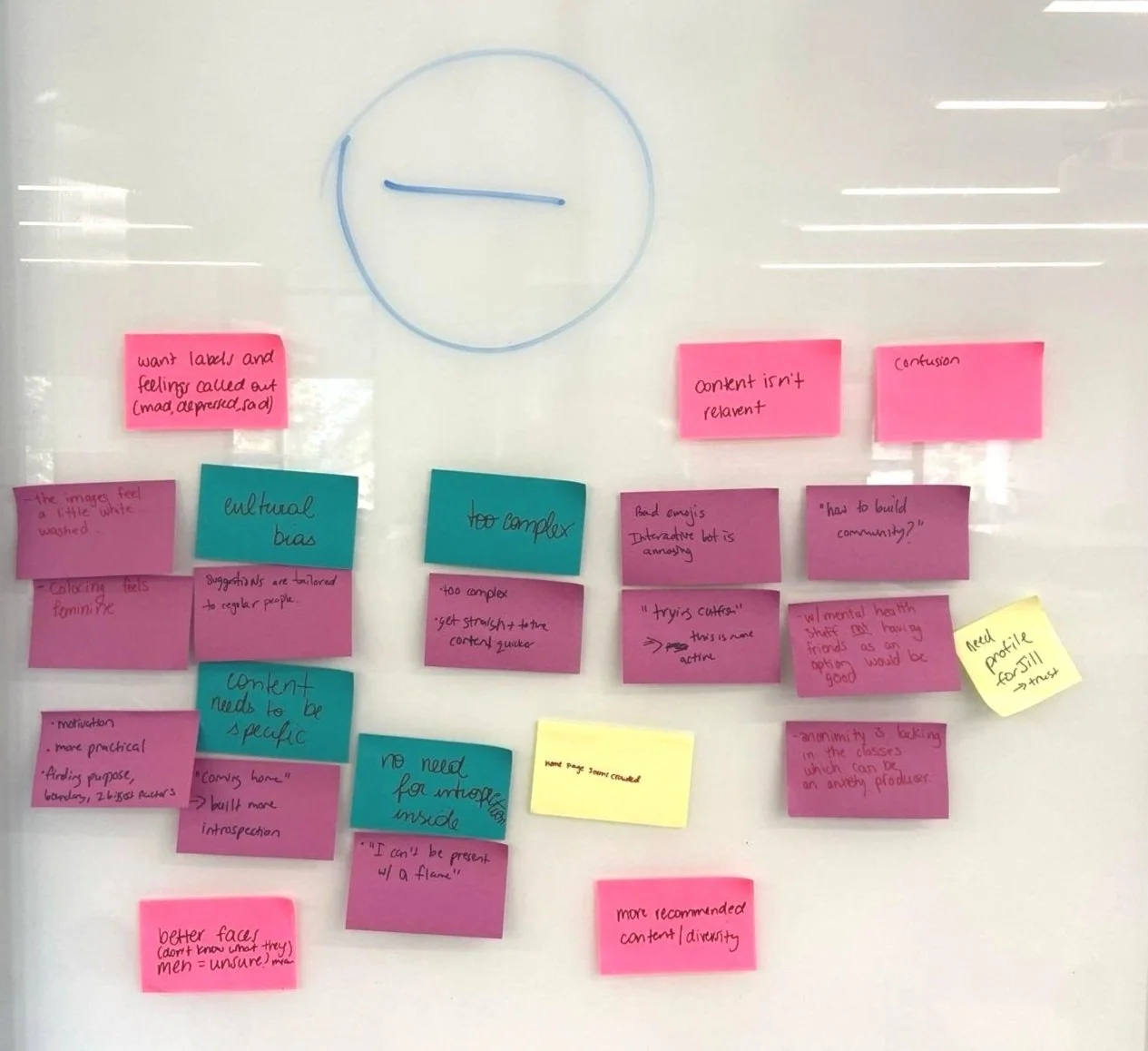
Test & Refine | Guerilla user testing
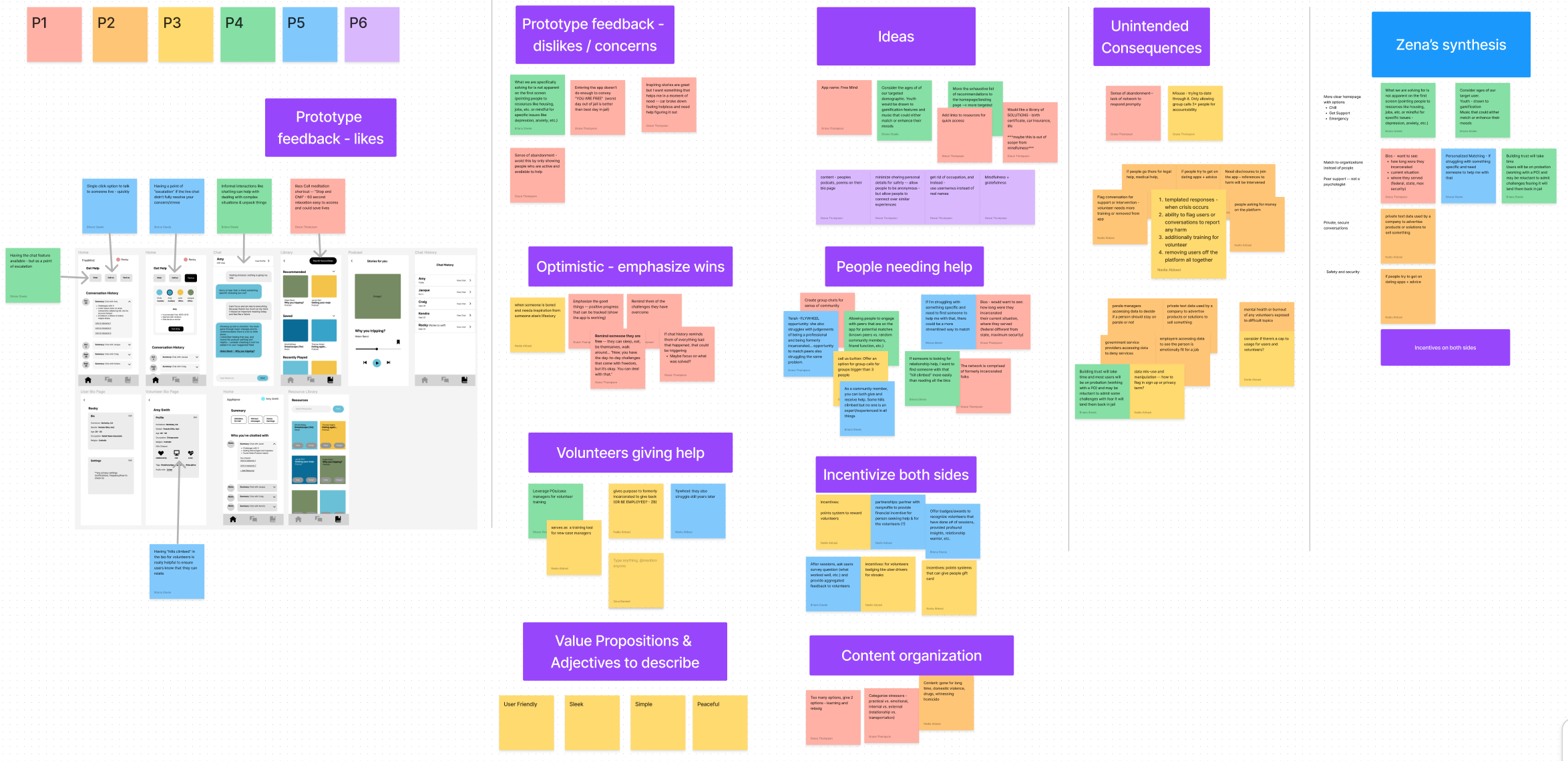
To test the prototype, we solicited feedback from six people from the formerly incarcerated community in 1:1 user testing sessions. During the sessions, we also led participants through an “unintended consequeces” analysis of the app.
We compiled notes in FigJam and synthesized insights with Zena.
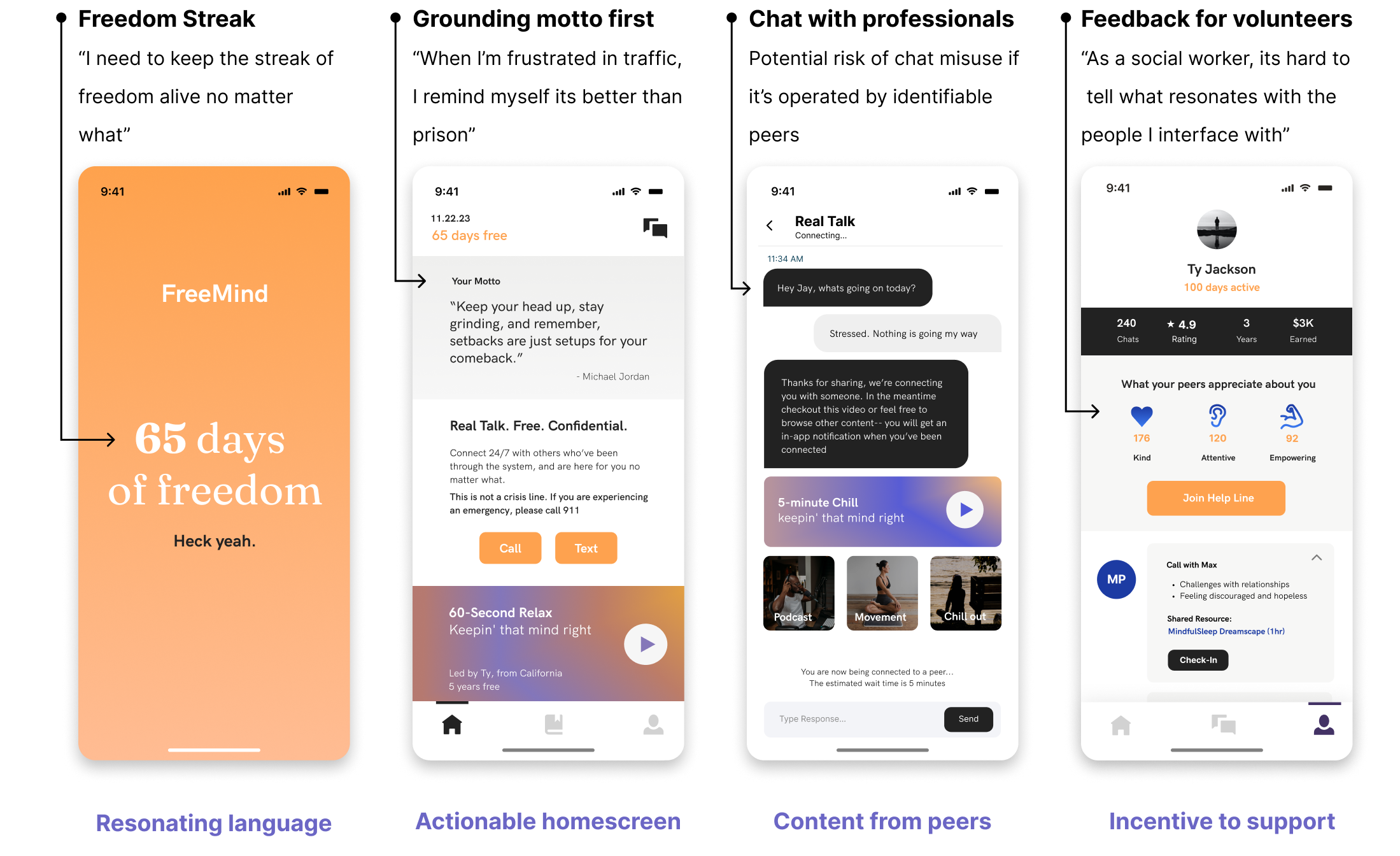
Refine | High-Fidelity Prototype
We adjusted the final prototype based on user feedback and risk factors.
Evaluation
15 likert scale questions:
Product stickiness and engagement: This app fits naturally into my daily routine
Trust and customer loyalty: I trust the guidance/content this app provides
Market differentiation: This app feels different from other meditation apps I've used.
Traditional vs. Equitable Design | Survey
100 Respondents:
56% white
74% attended some college
56% ages 18-34
ShhShh (Traditional design)… Was overall preferred! BUT all co-designers preferred FreeMind (Equitable design).
ShhShh was overall preferred… even when we sub-analyzed by demographics.
Although participants preferred ShhShh overall, FreeMind may be more helpful for formerly incarcerated individuals (equitable target audience) reintegrating into society. Our overall recommendation is to design equitably first to answer a need. Traditional design approaches help scale the product beyond the niche.
Reflection
This project had several limitations given its large scope (designing two apps in 4 months).
Insight: Comparing two design processes was challenging because they yielded two different apps. During the Equitable phase, we spent more time on collaborative ideation (less time to develop the high-fi prototype). Perhaps participants preferred the Traditional prototype because it had a higher-fidelity UI.
Future work: I would adapt the Equitable app based on feedback from non-target users— I expect this would outperform the Traditional app.